For much of modern history, education has been regarded as the primary pathway to employment, economic mobility, and social progress. Families invested in schooling with the expectation that academic achievement would lead to stable careers, rising incomes, and long-term professional security. Governments expanded access to education to support industrialization, innovation, and national development. Businesses relied on educational institutions to produce the workforce required for economic growth.
This relationship, however, is undergoing one of the most profound transformations since the Industrial Revolution.
Artificial intelligence, automation, demographic shifts, digitalization, geopolitical fragmentation, climate transition, and the rapid acceleration of technological innovation are reshaping not only the nature of work but also the very purpose of education. The traditional sequence—education, employment, retirement—is giving way to careers characterized by multiple transitions, continuous learning, technological adaptation, and increasing uncertainty.
The challenge facing societies is therefore no longer simply to educate more people. It is to educate differently.
The central question of the twenty-first century is not whether education remains valuable. It undoubtedly does. Rather, the question is whether educational systems can evolve quickly enough to prepare individuals for professions, technologies, and economic realities that often do not yet exist.
From Agricultural Societies to the Knowledge Economy
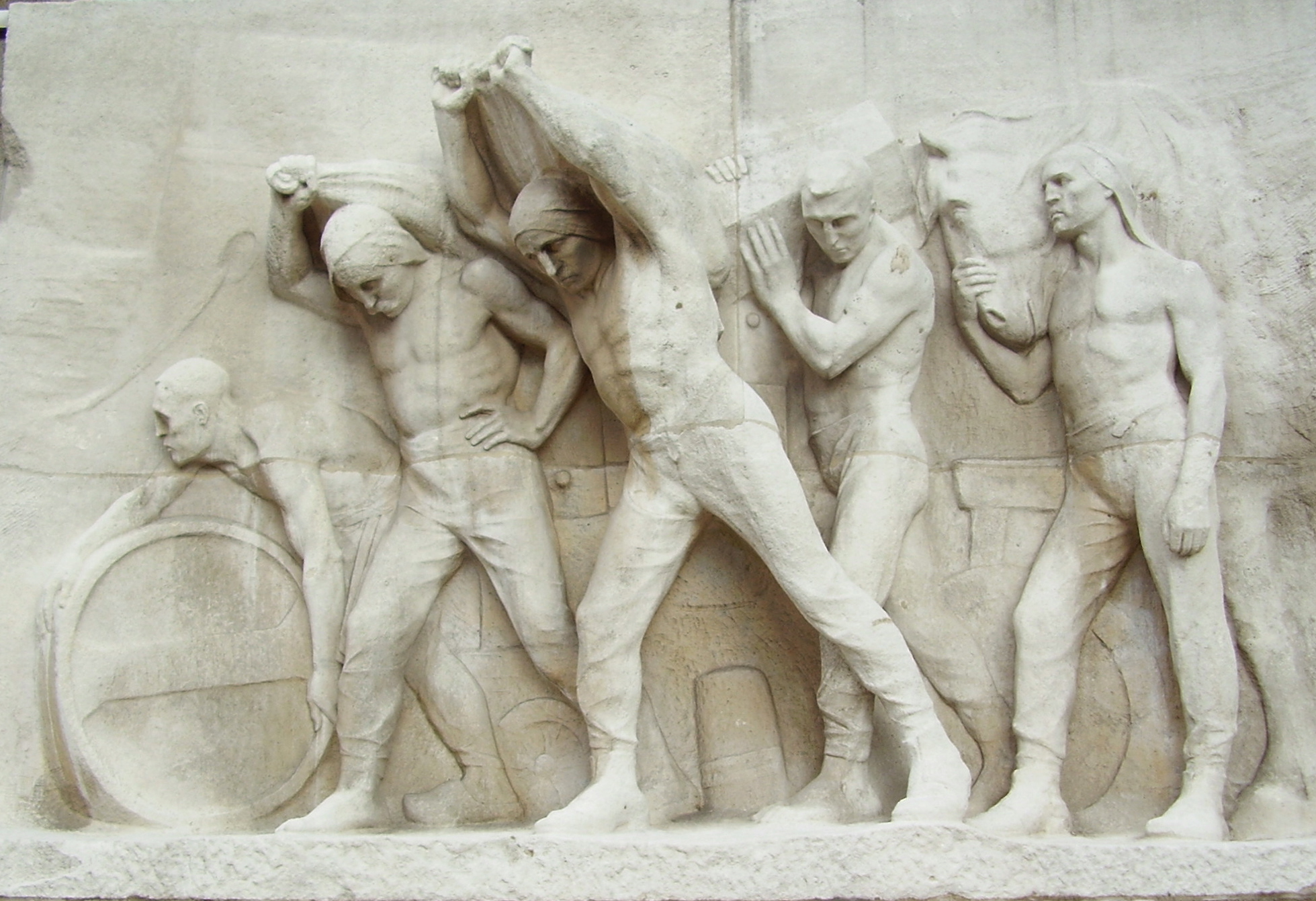
Education has always reflected the economic organization of society. In agricultural civilizations, learning occurred primarily within families and communities. Skills were transmitted across generations through observation and practice. Economic production depended largely on physical labor and inherited knowledge.
The Industrial Revolution transformed this relationship. Factories required standardized skills, punctuality, literacy, and numerical competence. Public education expanded not only as a social policy but also as an economic necessity. Schools became institutions designed to prepare workers for increasingly organized industrial systems.
The twentieth century further reinforced this model. As manufacturing evolved and service economies expanded, higher education became increasingly associated with social mobility. University degrees functioned as gateways to professional careers, while vocational education supplied technical expertise for industrial production.
By the end of the century, developed economies had entered what many described as the knowledge economy. Information, research, innovation, finance, and technology progressively replaced heavy industry as the principal drivers of value creation.
Education became both an economic investment and a competitive advantage. Yet this model rested upon an implicit assumption: that knowledge acquired during the early stages of life would remain relevant throughout a significant portion of one’s professional career. That assumption is rapidly disappearing.
A Labor Market Defined by Continuous Transformation
Several structural forces are simultaneously reshaping employment. Artificial intelligence now performs tasks once considered exclusively human. Automation increasingly affects not only manufacturing but also administrative work, legal research, accounting, software development, financial analysis, customer service, and medical diagnostics.
Digital platforms have enabled new forms of independent work while reducing traditional organizational boundaries. Remote work has fundamentally altered geographical constraints on employment. Population aging in many advanced economies is changing labor supply dynamics, while younger populations in emerging economies are creating entirely different workforce challenges.
Climate transition is generating new industries while gradually transforming others. These transformations are not isolated. They reinforce one another. The result is a labor market characterized less by stability than by continuous adaptation.
Entire occupations may disappear. Others will emerge unexpectedly. Many existing professions will simply evolve. Most workers will likely experience several substantial career transitions during their working lives. Employment is becoming increasingly dynamic rather than static.
The Accelerating Obsolescence of Skills
Historically, professional skills often remained relevant for decades. Today, technological change shortens their economic lifespan. Programming languages evolve. Financial regulations change. Artificial intelligence transforms analytical workflows. Industrial technologies are continuously upgraded. Healthcare practices integrate new digital tools. Marketing increasingly depends upon algorithmic platforms. Cybersecurity threats evolve daily. Knowledge itself has become perishable.
This phenomenon produces an unprecedented paradox. Never before have societies invested so heavily in education. Never before have acquired competencies become obsolete so rapidly. Consequently, education can no longer be understood as a finite stage completed before entering professional life. It increasingly becomes the first phase of lifelong learning.
Beyond the Degree
Degrees remain valuable. They continue to signal discipline, intellectual capacity, technical knowledge, and the ability to complete demanding academic programs. However, employers increasingly evaluate characteristics that extend beyond formal qualifications.
- Adaptability.
- Critical thinking.
- Digital literacy.
- Problem-solving.
- Communication.
- Collaboration.
- Decision-making under uncertainty.
- Creativity.
- Learning capacity.
These competencies are difficult to automate precisely because they rely upon judgment rather than routine. Artificial intelligence excels at processing information. Human value increasingly lies in interpreting information. This distinction will become progressively more important as intelligent systems continue to improve.
The Rise of Lifelong Learning
Perhaps the most significant transformation concerns the emergence of lifelong learning as an economic necessity. Continuous education is no longer reserved for career changes. It increasingly becomes an essential component of remaining professionally relevant. Workers will need to update technical competencies repeatedly. Managers will require digital leadership capabilities. Engineers must continuously master evolving technologies. Healthcare professionals constantly integrate medical innovation. Financial analysts increasingly rely upon artificial intelligence tools. Teachers themselves must learn new educational methods.
Learning is becoming embedded within employment rather than preceding it. Consequently, the distinction between education and work gradually weakens. Professional development becomes permanent.
Artificial Intelligence as Both Challenge and Opportunity
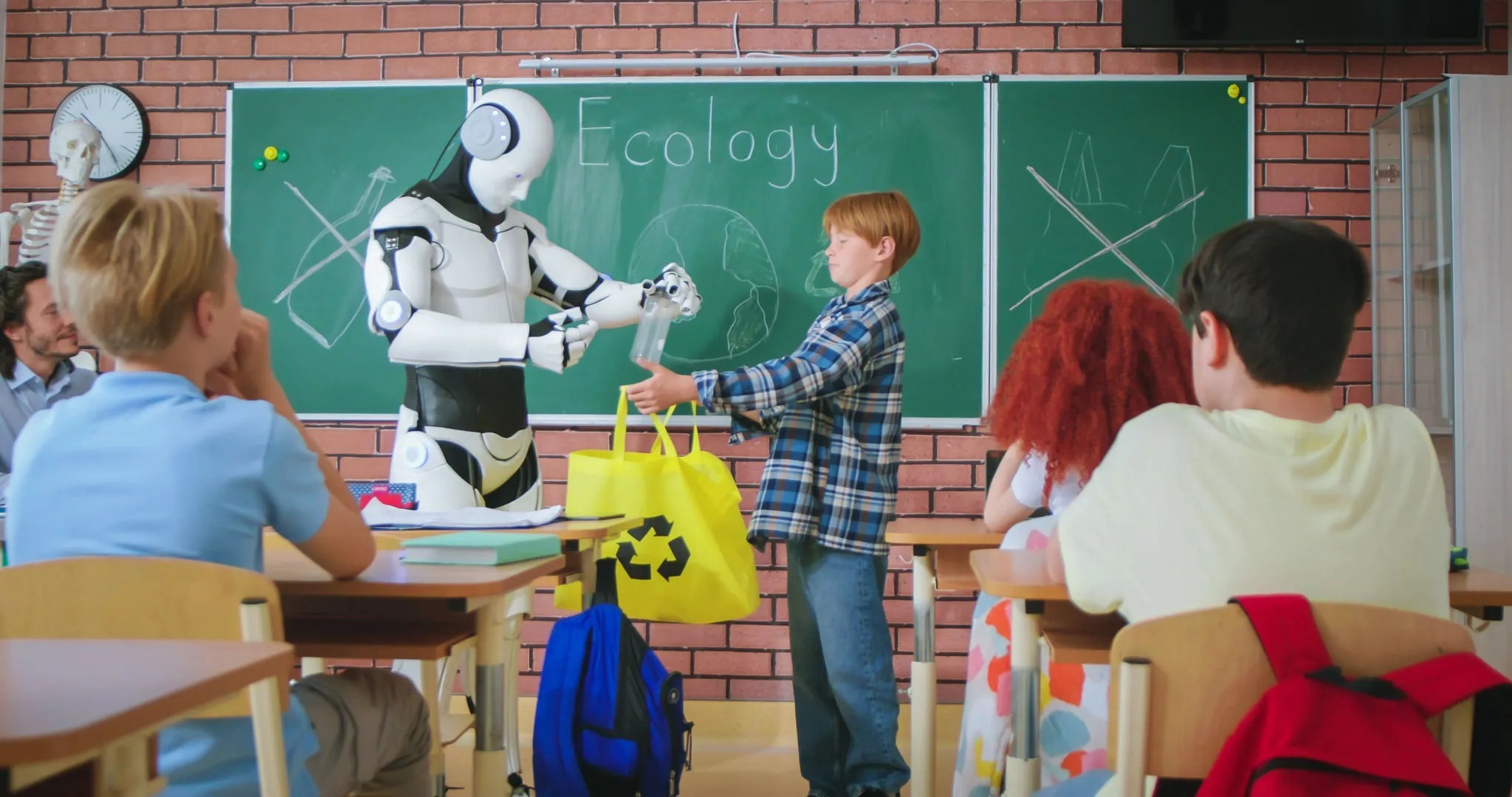
Artificial intelligence represents one of the most significant educational disruptions in modern history. Its impact extends well beyond automation. AI changes how knowledge is produced, accessed, organized, and applied. Students can now receive personalized tutoring. Educational materials can be generated instantly. Language barriers continue to diminish. Learning pathways become increasingly individualized.
Assessment methods evolve. Teachers gain powerful support tools. Yet AI simultaneously raises fundamental questions.
- If machines increasingly generate information, what should humans learn?
- If algorithms solve technical problems, which uniquely human abilities become most valuable?
- If knowledge becomes universally accessible, how should educational institutions redefine their role?
The answer increasingly lies not in memorization but in reasoning. Educational systems may progressively shift from transmitting information toward developing judgment. The objective becomes less knowing everything than understanding how to evaluate, question, verify, and apply knowledge responsibly.
Universities Under Pressure
Higher education institutions face mounting pressure from multiple directions.
- Students seek employability.
- Governments seek productivity.
- Businesses seek practical competencies.
- Researchers seek innovation.
- Society seeks inclusion.
Universities therefore confront increasingly complex expectations. They must preserve academic excellence while remaining economically relevant. They must prepare graduates for occupations that may not yet exist. They must integrate digital technologies without sacrificing intellectual rigor. They must educate specialists while simultaneously cultivating interdisciplinary thinking.
This balancing act represents one of the defining institutional challenges of our era.
Businesses as Educational Actors
Companies increasingly participate directly in workforce development. Large organizations establish internal academies. Professional certifications proliferate. Micro-credentials gain recognition. Digital learning platforms expand globally. Corporate universities become commonplace.
Employers increasingly recognize that external educational systems alone cannot satisfy rapidly evolving skill requirements. Training shifts from being a human resources function to becoming a strategic investment. Knowledge management becomes an element of competitiveness. Human capital becomes a strategic asset comparable to technology or infrastructure.
Governments and National Competitiveness
Education has traditionally been viewed primarily as a social policy. Increasingly, it constitutes industrial policy.
- Countries compete for talent.
- They compete for researchers.
- They compete for engineers.
- They compete for entrepreneurs.
- They compete for artificial intelligence specialists.
Educational performance increasingly influences national competitiveness, innovation capacity, technological sovereignty, and long-term economic resilience. Investment in education therefore extends beyond social welfare. It becomes an investment in national strategic capability.
Countries capable of continuously upgrading workforce competencies may adapt more successfully to technological disruption than those relying primarily upon existing industrial advantages.
Inequality in the Age of Continuous Learning
Transformation also creates risks. Access to quality education remains highly unequal. Digital infrastructure differs significantly across countries.
Continuous training opportunities often benefit highly skilled workers more than vulnerable populations. Technological disruption may therefore widen existing inequalities. Those possessing adaptable skills continue progressing. Those lacking access to reskilling opportunities risk prolonged exclusion.This challenge extends beyond employment.
- It affects social cohesion.
- Economic mobility.
- Political stability.
Inclusive lifelong learning consequently becomes not merely an educational objective but a societal necessity.
Education and Geopolitics
Talent increasingly represents geopolitical power. Countries attracting highly qualified professionals strengthen innovation ecosystems. Those experiencing sustained brain drain risk slower economic development. Artificial intelligence intensifies this competition.
Advanced economies compete globally for researchers, engineers, scientists, and entrepreneurs. Universities become instruments of soft power. Research institutions influence technological leadership. Scholarship programs strengthen diplomatic relationships. Knowledge itself increasingly functions as strategic capital.
The competition for natural resources increasingly coexists with competition for human capital.
Rethinking Educational Success
Traditional indicators often emphasize graduation rates, enrollment levels, or academic attainment. These remain important. Yet future educational success may increasingly depend upon additional dimensions.
- How rapidly can workers acquire new competencies?
- How effectively can educational institutions collaborate with industry?
- How accessible is lifelong learning?
- How resilient is the workforce to technological disruption?
- How successfully can societies reduce skill mismatches?
Educational performance becomes increasingly dynamic rather than static. The objective shifts from producing graduates to sustaining adaptable populations.
- Towards a New Educational Paradigm
- Several principles appear increasingly essential.
Education should cultivate intellectual curiosity rather than simple information retention. Critical thinking should complement technical expertise. Digital literacy should become universal. Interdisciplinary learning should expand.
Continuous education should become accessible throughout professional life. Collaboration between governments, universities, businesses, and civil society should intensify. Technological literacy should coexist with ethical reflection.
Learning should become progressively personalized while preserving shared civic values. Education increasingly evolves from a one-time investment into a lifelong public infrastructure.
Conclusion
Every major economic transformation has required a corresponding transformation of education. The Industrial Revolution created mass schooling. The knowledge economy expanded higher education.
The age of artificial intelligence demands something different. It demands educational systems capable of preparing individuals not merely for specific occupations but for continuous adaptation.
The most valuable competency of the coming decades may no longer be mastery of a particular discipline. It may be the capacity to continuously acquire new knowledge, integrate new technologies, question assumptions, collaborate across disciplines, and navigate uncertainty with sound judgment.
In this emerging world, education remains the foundation of prosperity. Training becomes the mechanism of resilience. And learning itself becomes a permanent condition of professional life.
The countries, institutions, businesses, and individuals that understand this transformation earliest are unlikely to possess every answer. They will simply possess something increasingly valuable: the ability to keep learning faster than the world keeps changing.
Atlas Observer Research Desk
Atlas Observer’s editorial and analytical desk.