For nearly eight decades, relations between Saudi Arabia and the United States rested on an apparently simple formula: the security of the kingdom in exchange for its contribution to global energy stability. That interpretation remains useful, but it is no longer sufficient to explain the density or the contradictions of the contemporary partnership.
Saudi Arabia is no longer merely an oil supplier protected by American military power. It now seeks to become an economic, financial, technological and diplomatic power capable of negotiating simultaneously with Washington, Beijing, Moscow, New Delhi and the major European capitals. The United States, for its part, remains the kingdom’s most important security partner, but it no longer enjoys the strategic monopoly it once exercised.
The Saudi-American relationship is therefore neither disappearing nor returning to its former balance. It is changing in nature. Interdependence remains deep, but it is becoming more transactional, more diversified and more exposed to diverging interests.
The Founding Pact: Energy, Security and Regional Stability
The February 1945 meeting between President Franklin D. Roosevelt and King Abdulaziz Ibn Saud aboard the USS Quincy is generally regarded as the symbolic foundation of the modern relationship between the two countries. It did not establish a formal treaty explicitly based on an exchange of oil for protection, but it laid the foundations of a lasting convergence.
Saudi Arabia possessed immense hydrocarbon reserves and occupied a central position in the Gulf. The United States had the military, financial and technological capabilities required to support the kingdom’s development and protect the regional order.
Over the following decades, this convergence became institutionalized. American companies contributed to the expansion of the Saudi oil industry. Washington supplied weapons, trained military forces and helped defend Saudi territory. Riyadh, in turn, played a decisive role in supplying global markets and managing oil crises.
This architecture never implied a perfect identity of interests. The 1973 oil embargo demonstrated that Riyadh could use energy as a political instrument, including against its Western partners. Yet successive crises also confirmed the resilience of the partnership. During the 1990–1991 Gulf War, Saudi Arabia hosted significant American forces to protect the kingdom and liberate Kuwait.
The relationship was based less on absolute trust than on mutual dependence: the United States needed a relatively stable Gulf, while Saudi Arabia needed an external military guarantor capable of containing regional threats.
Oil Remains Central, but Its Role Has Changed
The rise of American hydrocarbon production has profoundly altered the energy equation. The United States became the world’s largest oil producer, reducing its direct dependence on Saudi imports. Volumes of Saudi crude imported by the United States remain far below the peaks reached in previous decades.
This development could suggest that Saudi Arabia’s strategic importance has declined. The reality is more complex.
Washington depends less on Saudi oil for domestic consumption, but the American economy remains exposed to global energy prices. A major disruption in the Gulf, a reduction in OPEC+ production or a crisis affecting Saudi infrastructure can still drive up international prices, fuel inflation and weigh on economic growth.
Saudi Arabia remains the most influential member of OPEC and one of the few producers with significant spare capacity. Its importance therefore lies not only in the barrels it exports to the United States, but also in its ability to influence the global balance between supply and demand.
This capacity gives Riyadh greater political autonomy. When Saudi budgetary interests require higher prices, the kingdom can support production restrictions even when they conflict with Washington’s preferences. Coordination with Russia within OPEC+ has reinforced this room for maneuver.
Saudi oil policy, however, is not simply aligned with Moscow or directed against the United States. It primarily responds to a national logic: maximizing revenues, preserving reserves, financing economic transformation and maintaining the kingdom’s credibility as a regulator of the market.
A Security Architecture That Is Difficult to Replace
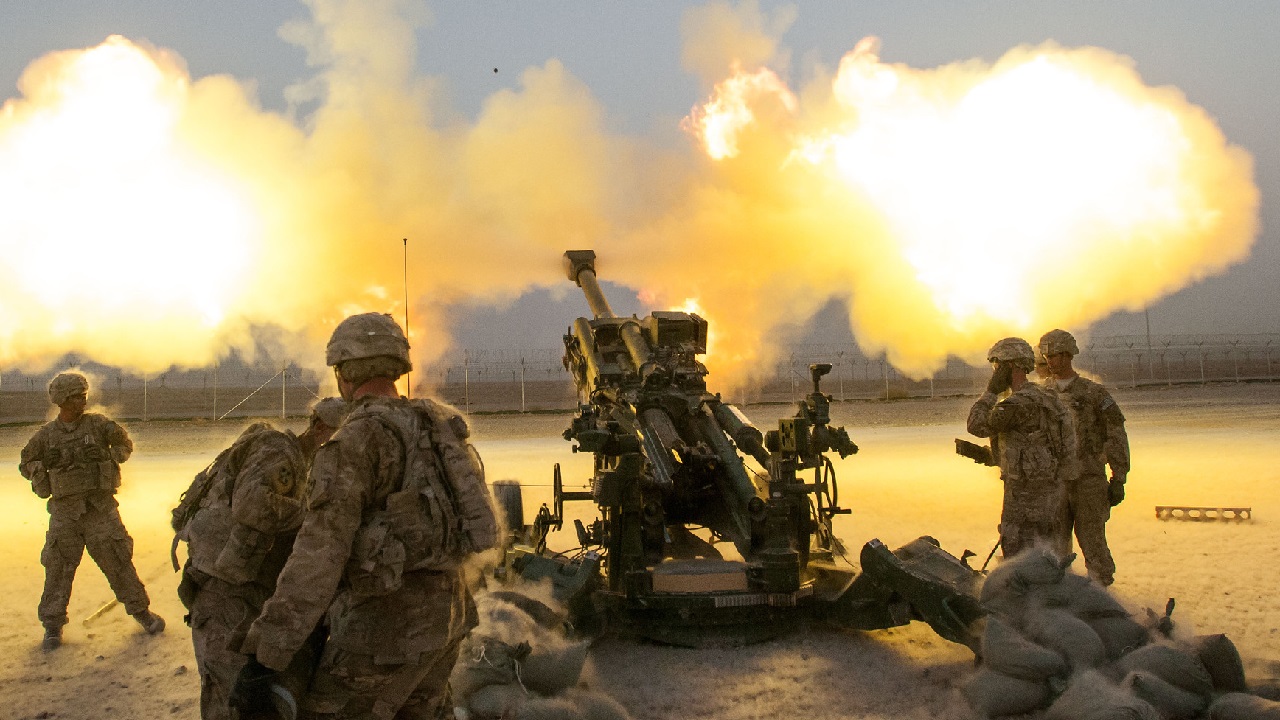
Despite political tensions, defense remains the core of the relationship. Saudi forces rely extensively on American equipment: fighter aircraft, air-defense systems, helicopters, armored vehicles, munitions and command infrastructure. This dependence concerns not only the initial purchase of weapons. It also includes maintenance, training, spare parts, intelligence, logistics and operational interoperability.
The U.S. State Department still presents Saudi Arabia as an essential partner for regional security, counterterrorism and the international coalition against the Islamic State organization.
For Riyadh, no other power can currently provide the full range of guarantees offered by the United States. China can sell certain military systems and support technological projects. Russia has a significant defense industry. But neither Beijing nor Moscow possesses in the Gulf a network of bases, air, naval, satellite and intelligence capabilities comparable to that of Washington.
For the United States, the kingdom also remains a geostrategic anchor. Its position helps monitor key energy routes, contributes to security in the Red Sea and the Gulf, supports the containment of regional threats and facilitates American operations in the Middle East.
Saudi security has become more urgent with the proliferation of missiles, drones and asymmetric attacks. The strikes against the Abqaiq and Khurais oil facilities in September 2019 temporarily disrupted a substantial share of global production. More importantly, they exposed the vulnerability of strategic infrastructure to relatively low-cost attacks.
That episode left a lasting impression on Saudi strategic thinking. The absence of a direct American military response fueled doubts about the strength of the U.S. security guarantee. For Saudi leaders, possessing American weapons is no longer enough. They also want to know under what circumstances Washington would actually be prepared to intervene.
A Relationship Weakened by Political Crises
Saudi-American relations have gone through several major crises. The September 11, 2001 attacks were a profound shock. Fifteen of the nineteen perpetrators were Saudi nationals. Although the Saudi government was not officially designated as the organizer of the attacks, the event durably damaged the kingdom’s image in the United States and intensified scrutiny of the financing of radical religious movements.
The war in Yemen, launched by the Saudi-led coalition’s intervention in 2015, later generated strong criticism in the U.S. Congress. Civilian casualties, the humanitarian crisis and the use of Western weapons transformed arms sales into a domestic political issue in the United States.
The murder of journalist Jamal Khashoggi inside the Saudi consulate in Istanbul in 2018 caused another symbolic rupture. The case crystallized criticism of human rights, the kingdom’s system of governance and the role of Crown Prince Mohammed bin Salman.
These crises revealed a structural difference between the two political systems. For Riyadh, the relationship is primarily a matter of state interest, security and strategic calculation. In the United States, it must also accommodate Congress, the media, human-rights organizations, changes of administration and electoral polarization.
The American president may seek to deepen cooperation, but arms sales, nuclear agreements or security guarantees may require congressional support. Saudi Arabia therefore does not negotiate with a single American actor. It must simultaneously manage the White House, the State Department, the Pentagon, Congress and public opinion.
This fragmentation contrasts with the centralization of power in Saudi Arabia. It makes the relationship less predictable for Riyadh and contributes to its desire to diversify its partnerships.
Mohammed bin Salman and the Assertion of Saudi Autonomy
The rise of Mohammed bin Salman accelerated the transformation of Saudi foreign policy. The crown prince is not necessarily seeking to break with the United States. His objective is rather to reduce the kingdom’s exclusive dependence and expand its freedom of action. Riyadh wants to cooperate with Washington on defense, with Beijing on infrastructure and technology, with Moscow on the oil market, and with other powers on investment and nuclear energy.
This strategy reflects the broader evolution of the international system. Saudi Arabia considers that global power is now more dispersed. The United States remains dominant in several fields, but China has become a major commercial partner, India an essential energy market, and middle powers increasingly influential.
The kingdom is therefore pursuing a policy of balance rather than changing sides. Its rapprochement with China is the most visible example. Beijing is a major customer for Saudi oil and a potential investor in infrastructure, telecommunications, artificial intelligence, electric vehicles and manufacturing. The Chinese mediation that contributed to the restoration of diplomatic relations between Saudi Arabia and Iran in 2023 also demonstrated Beijing’s capacity to play a political role in the region.
But China does not replace the United States. It expands the range of Saudi options. Riyadh seeks to obtain from each partner what it can offer best, while avoiding exclusive dependence on any one of them.
Vision 2030 Is Redefining Shared Interests
The economic transformation launched through Vision 2030 has become one of the principal drivers of the bilateral relationship. Saudi Arabia’s objective is to reduce dependence on hydrocarbons, develop the private sector, attract foreign investment and build new industries. The kingdom is investing in tourism, infrastructure, transport, financial services, sport, digital technologies, artificial intelligence, renewable energy, mining and defense.
This policy creates a new field for cooperation with the United States. American companies can provide technologies, equipment, management expertise, financial services, cloud infrastructure, cybersecurity solutions and advanced military systems.
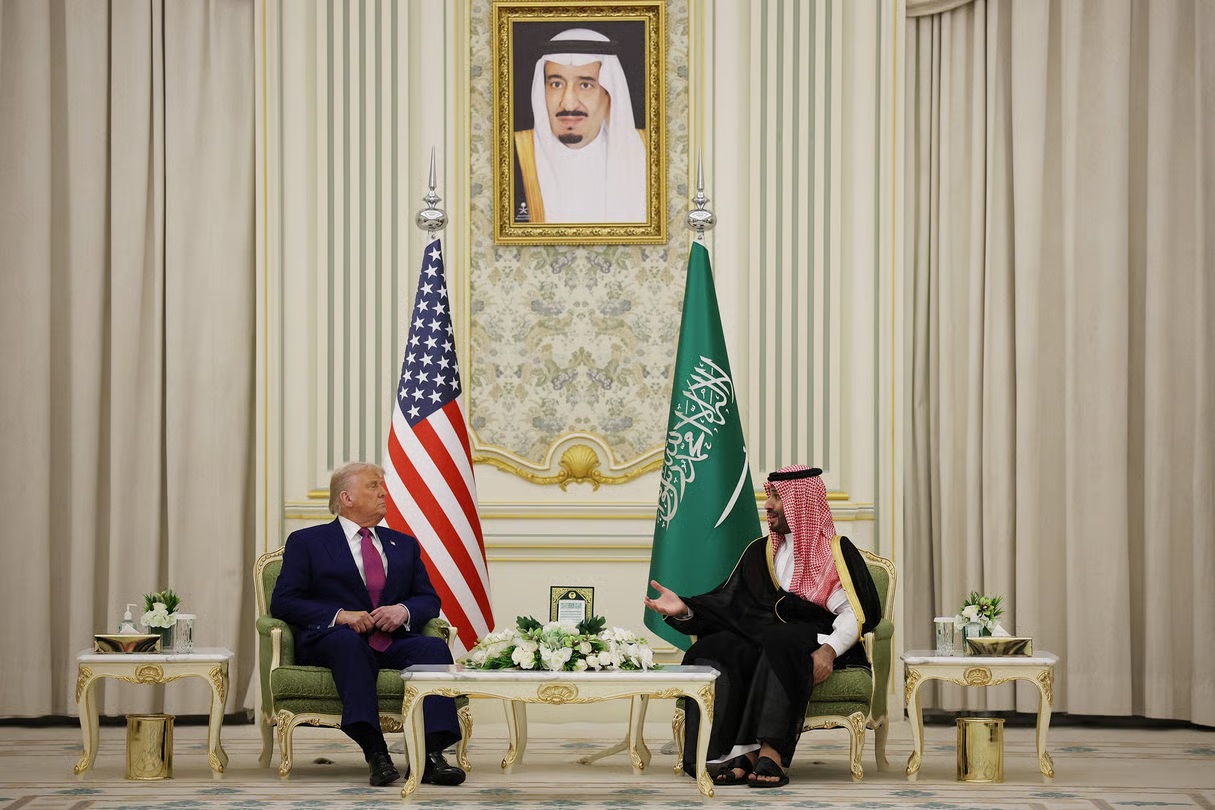
In May 2025, the White House announced a Saudi commitment of $600 billion in investment and trade with the United States, alongside agreements in defense, energy, technology and infrastructure. The announced figures should be distinguished from investments actually completed, since such packages generally include commitments, memoranda of understanding, orders and projects spread over several years. They nevertheless illustrate the expansion of the partnership beyond oil.
The relationship between the two countries is therefore becoming a relationship of capital as much as an energy relationship. Saudi sovereign wealth funds invest in American companies, funds and projects. In return, Riyadh seeks to attract American groups in order to localize activities, transfer expertise and accelerate the kingdom’s diversification.
A tension nevertheless remains between the two approaches. The United States often seeks to sell technologies and attract Saudi capital. Saudi Arabia, by contrast, wants those partnerships to help build national capabilities. It no longer wishes to remain only a customer. It wants to become a producer, an investor and, eventually, a competitor in certain sectors.
Artificial Intelligence as a New Strategic Arena
Advanced technologies are occupying an increasingly important place in the relationship. Saudi Arabia has three significant advantages in the development of artificial intelligence: substantial financial resources, abundant energy and a centralized decision-making system capable of launching major projects quickly. The kingdom aims to build data centers, attract technology companies and become a regional digital hub.
American companies are particularly well positioned to support this ambition. They dominate several critical segments, including advanced semiconductors, cloud services, artificial-intelligence models, enterprise software and cybersecurity.
But this cooperation is inseparable from the rivalry between the United States and China. Washington imposes controls on the export of certain chips and technologies that could enhance Chinese military or technological capabilities. It may therefore condition Saudi access to the most advanced technologies on guarantees concerning cybersecurity, data transfers and partnerships with Chinese companies.
Riyadh consequently faces a trade-off. American technologies are often the most advanced, but they can come with political restrictions. Chinese alternatives may sometimes be less sophisticated, but can appear more flexible and less conditional.
Artificial intelligence could become what oil was in the twentieth century: a major economic sector, but also an instrument of sovereignty, influence and strategic alignment.
The Civil Nuclear Question
The development of a Saudi civilian nuclear program represents another sensitive issue. The kingdom says it wants to diversify its energy mix, preserve more oil for export and develop long-term industrial expertise. It also emphasizes that it may possess uranium resources and does not want to remain entirely dependent on foreign suppliers for its energy cycle.
Washington could provide reactors, technology, regulatory expertise and security guarantees. Nuclear cooperation with the United States would also carry significant geopolitical weight by reducing the likelihood that Riyadh turns to China or Russia.
Negotiations, however, face the issue of uranium enrichment and fuel reprocessing. The United States generally seeks to impose strict non-proliferation safeguards. Saudi Arabia is reluctant to renounce capabilities it considers part of its sovereignty, especially if Iran retains an advanced nuclear infrastructure.
The nuclear issue therefore illustrates the central paradox of the relationship: both countries have an interest in cooperating, but they do not necessarily share the same definition of sovereignty, risk and long-term security.
Israel, Palestine and the Limits of Convergence
The prospect of normalization between Saudi Arabia and Israel has occupied a central place in trilateral discussions with Washington.
For the United States, an agreement would represent a major transformation of the regional order. It could strengthen the economic and security integration of the Middle East, deepen cooperation against shared threats and consolidate the normalization agreements concluded since 2020.
For Saudi Arabia, normalization could help secure major concessions: American security guarantees, easier access to advanced weapons, civilian nuclear cooperation and technological investment.
The Palestinian question, however, sharply limits Saudi room for maneuver. The kingdom hosts Islam’s two holiest sites and claims a particular responsibility within the Arab and Muslim worlds. Normalization without credible progress for the Palestinians would carry a significant political and symbolic cost.
Regional crises have made the equation even more difficult. Normalization can no longer be presented merely as a diplomatic transaction between governments. It depends on the evolution of the Israeli-Palestinian conflict, the humanitarian situation and the ability of the parties to define an acceptable political horizon.
Riyadh is not necessarily closing the door to an agreement, but it seeks to avoid a normalization process that would appear to abandon the Palestinian cause.
Iran: Adversary, Neighbor and Permanent Constraint
Iran remains one of the principal determinants of Saudi-American relations. Riyadh and Tehran compete for regional influence, Gulf security and the political balance of the Middle East. Iran’s nuclear program, ballistic missiles and support for armed groups are major concerns for the kingdom.
This rivalry long reinforced Saudi dependence on the United States. Riyadh is now seeking to combine deterrence with dialogue.
The restoration of diplomatic relations between Saudi Arabia and Iran did not eliminate their differences. It responded to a strategy of risk reduction. The kingdom wants to prevent its territory, infrastructure and economic projects from becoming the first victims of a regional confrontation.
This approach can sometimes diverge from Washington’s. The United States views Iran through the lens of its own non-proliferation objectives, the protection of its forces and support for its partners. Saudi Arabia reasons first from geographic proximity. It cannot leave the region or permanently remove Iran from its environment.
Riyadh therefore wants to preserve American protection while maintaining channels of communication with Tehran. This policy does not indicate alignment with Iran. It reflects an effort to control the risk of escalation.
China’s Growing Weight
China has become unavoidable in Saudi strategic calculations. It is a major commercial partner, absorbs a significant share of the kingdom’s energy exports and participates in projects related to infrastructure, industry and the digital economy. It also offers Riyadh a political partnership based on non-interference in domestic affairs.
For the United States, this presence raises several concerns. Washington fears that some Chinese digital infrastructure could facilitate access to sensitive data, that Chinese military equipment could limit interoperability with American systems, or that technological partnerships could enable indirect transfers of strategic technologies.
The Sino-American rivalry therefore transforms Saudi economic choices into geopolitical decisions.
Riyadh nevertheless seeks to resist a bloc-based logic. It does not want to choose between American military guarantees and Chinese economic opportunities. Its strategy is to maintain close cooperation with both powers while separating sensitive areas as much as possible.
That position will become increasingly difficult to sustain if Washington and Beijing strengthen their respective restrictions. The more technological rivalry intensifies, the more middle powers will be forced to make their infrastructure compatible with one ecosystem or the other.
A More Transactional Alliance
The transformation of the relationship is also visible in the language used to describe it. References to shared values or a common political vision have always been limited. Today, the two countries increasingly present their partnership as a set of concrete transactions: arms contracts, investment, energy cooperation, maritime security, counterterrorism, access to technology and diplomatic coordination.
This transactional dimension does not necessarily imply a weaker relationship. It may even make it more transparent, with each side identifying what it contributes and what it expects in return.
But it also creates risk. An alliance built primarily on negotiated exchanges can become vulnerable when costs rise or benefits appear insufficient. In the absence of deep political trust, every crisis can revive doubts about the reliability of the partner.
Saudi Arabia seeks more explicit security guarantees. The United States, in return, wants closer Saudi alignment on major regional, technological and economic issues. The problem is that each side wants to reduce its exposure without giving up the advantages of the relationship.
The Asymmetry Has Not Disappeared
Saudi Arabia’s growing power should not obscure the continuing asymmetry between the two countries. The United States remains a military, technological and financial superpower. It controls access to essential weapons systems, advanced technologies and a large part of the international financial architecture. Its regional military presence remains unmatched.
Saudi Arabia nevertheless possesses levers that Washington cannot ignore: energy resources, investment capacity, geographic position, religious influence, weight in the Arab world, its role within OPEC+ and access to expanding markets. The relationship has therefore not become symmetrical. It has become more negotiated.
Riyadh has more options and is less willing to accept American pressure automatically. Washington retains greater capabilities, but must offer more substantial concessions to secure Saudi alignment.
Three Scenarios for the Future
The first scenario would be a deep strategic renewal. The two countries could conclude a more formalized security architecture, develop civilian nuclear cooperation, strengthen technology transfers and coordinate their regional policies more closely. Such a rapprochement would consolidate the United States’ position in the Gulf and provide Saudi Arabia with the guarantees required for its transformation projects.
The second scenario would be a selective partnership. Military and economic cooperation would remain strong, but Riyadh would continue to diversify its relationships and adopt independent positions on oil, China, Russia and regional crises. This scenario is probably the closest to the current trajectory: an indispensable relationship without automatic alignment.
The third scenario would be gradual fragmentation. Major disagreements over human rights, energy policy, China, nuclear cooperation or Israel could reduce trust and encourage Riyadh to seek more alternatives. Such an evolution would probably not produce an abrupt rupture, because military and economic dependencies remain deep. It would instead lead to a slow erosion of the relationship’s privileged character.
Conclusion
The alliance between Saudi Arabia and the United States is no longer based exclusively on oil in exchange for security. It now extends to investment, technology, nuclear energy, artificial intelligence, supply chains and the transformation of the regional order.
The United States remains the security partner that Saudi Arabia would find difficult to replace. But Riyadh no longer wants to depend on a single protector, a single market or a single technological center. It is building a diversified diplomacy designed to maximize its autonomy.
Washington must now treat the kingdom not merely as a dependent ally, but as a middle power with its own ambitions, its own partners and its own interpretation of the world.
The Saudi-American relationship therefore remains strategic, but it is no longer exclusive. It remains strong, but it is less predictable. It retains the structures of an alliance while increasingly adopting the behavior of a permanent negotiation.
In a multipolar world, its future will depend not only on the memory of the pact formed in the twentieth century. It will depend on the ability of both countries to define what they are still prepared to guarantee, share and concede in the twenty-first century.
Atlas Observer Research Desk
Atlas Observer’s editorial and analytical desk.