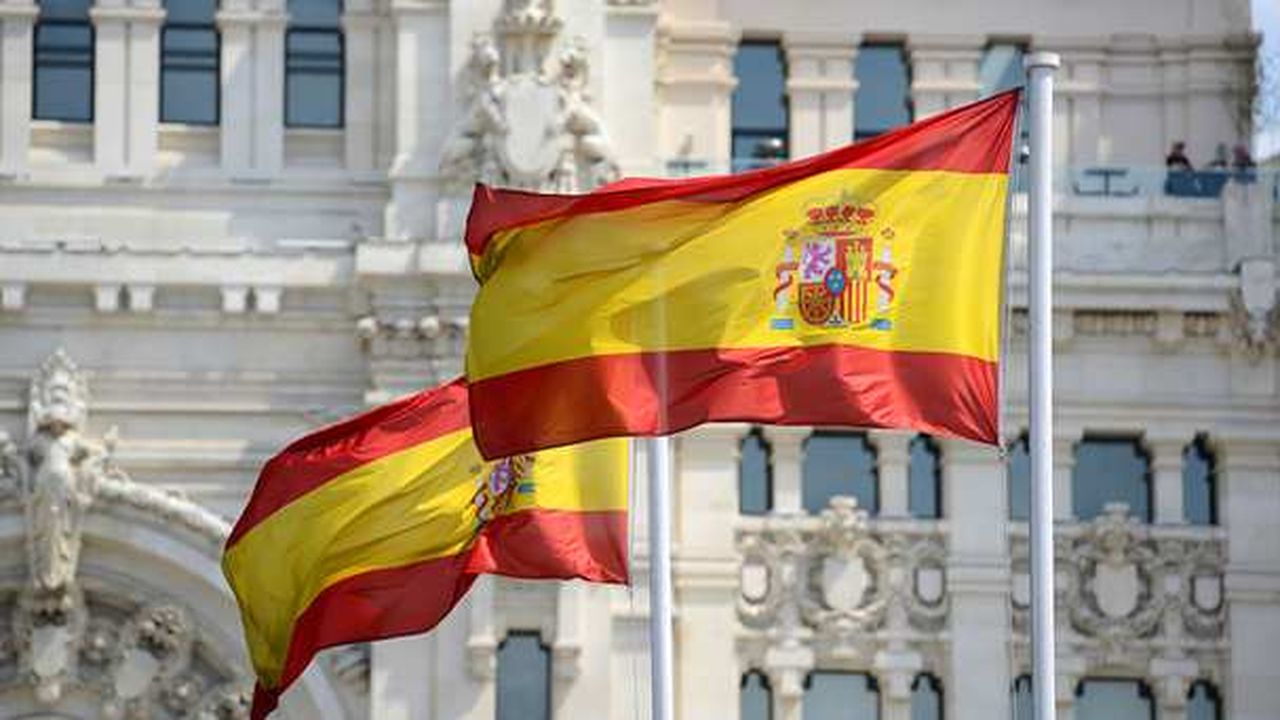
Spain is often perceived as a familiar power. Its name immediately evokes Madrid, Barcelona, Mediterranean tourism, football, the monarchy, imperial history, and a culture whose influence extends far beyond Europe. Yet this familiarity conceals a more complex reality. Spain is not merely a country in the south-western corner of Europe. It is a geographical junction between several regions, a former world power turned middle power, and a European state whose interests reach simultaneously into the Atlantic, the Mediterranean, the Maghreb, and Latin America.
Its position resembles that of the queen on a chessboard. The queen is not necessarily the piece that opens the game. She does not always control the centre from the first moves. But she possesses the greatest freedom of movement. She can intervene across several lines, shift rapidly from one theatre to another, and transform an apparently secondary position into a strategic advantage.
Spanish history can therefore be read as a succession of movements across a chessboard larger than Spain itself. At times conquered, at times conquering, Spain has been an imperial province, a frontier between civilisations, the centre of a global monarchy, an impoverished periphery of industrial Europe, and eventually a democracy integrated into the heart of the West. Its power has never rested on a single dimension. It has always depended on its ability to connect different worlds.
The question is therefore not whether Spain can become the empire it once was. It cannot, and it does not seek to. The real question is whether it can convert its geography, linguistic legacy, infrastructure, energy potential, and European position into lasting influence.
A peninsula at the centre of the crossroads
Spain begins with a geographical contradiction. Located at the western edge of the European continent, it may appear peripheral. Yet the Iberian Peninsula lies at the intersection of several decisive routes.
To the east, it opens onto the Mediterranean. To the west, it faces the Atlantic. To the south, only a few kilometres separate Europe from Africa across the Strait of Gibraltar. To the north, the Pyrenees form both a natural barrier and a gateway to the rest of the continent.
This position partly explains the extraordinary diversity of Spanish history. Phoenicians, Carthaginians, Romans, Germanic peoples, and Muslim dynasties successively occupied or administered parts of the peninsula. Spain did not emerge from isolation, but from overlapping movements, conquests, resistance, and cultural synthesis.
Under Rome, Hispania became one of the Empire’s major provinces. It supplied resources, soldiers, administrators, and even several emperors. After the collapse of the Western Roman Empire, the Visigothic kingdom attempted to unify the peninsula politically, but remained fragile.
From 711 onward, the Muslim conquest profoundly transformed Iberia. For centuries, Al-Andalus became one of the principal intellectual, agricultural, urban, and commercial centres of the medieval West. Córdoba, Seville, Toledo, and Granada participated in the circulation of knowledge between Arab, Jewish, and Christian worlds.
The Reconquista was neither a single campaign nor a linear advance. It unfolded over several centuries, during which Christian kingdoms and Muslim principalities fought, negotiated, traded, and at times formed unexpected alliances. This long history produced a politically fragmented peninsula in which regional identities remained powerful.
The dynastic union of Castile and Aragon in the late fifteenth century did not eliminate this diversity. It established instead a monarchical architecture in which several territories retained their institutions, rights, and traditions.
This tension between political unity and territorial plurality never fully disappeared. It remains visible today in the status of the autonomous communities, Catalan and Basque claims, the coexistence of several languages, and the persistent difficulty of defining Spain as a perfectly homogeneous whole.
From the peninsula to the world
The year 1492 occupies a unique place in the Spanish imagination. It marked the fall of the Kingdom of Granada, the symbolic completion of the Reconquista, and Christopher Columbus’s first voyage to the Americas.
From that moment, Spain changed scale. It ceased to be merely a peninsular power and became one of the first centres of a truly global system.
The Spanish monarchy expanded across the Americas, Europe, the Mediterranean, and as far as Asia. Precious metals extracted from the Americas financed the Crown’s ambitions and flowed through European commercial circuits. Spain controlled or influenced territories stretching from the Netherlands to the Philippines, from Mexico to the Andes, and from Italy to parts of North Africa.
Yet this vastness already contained the seeds of future weakness.
The influx of gold and silver enriched the state while also fuelling inflation. Imperial revenues financed costly wars, but reduced the incentive to develop domestic production sufficiently. The monarchy accumulated military commitments, dynastic rivalries, and debt. It had to defend distant territories, secure maritime routes, and confront several European powers simultaneously.
The Spanish Empire thus became a chessboard too vast to control. Every territory was another line to defend, every rival another potential threat, every victory another obligation.
Spanish power did not disappear suddenly. It eroded. The rise of England, France, and the Dutch Republic, the monarchy’s financial difficulties, European conflicts, and the gradual emancipation of the American colonies steadily reduced its influence.
During the nineteenth century, most of Spanish America achieved independence. In 1898, war with the United States led to the loss of Cuba, Puerto Rico, and the Philippines. The defeat produced a political and intellectual trauma in Spain. It exposed the gap between imperial memory and the reality of power.
Yet even after the empire disappeared, its legacy endured. The Spanish language, historical ties, diasporas, cultural institutions, and economic networks continued to connect Madrid to a large part of the world.
Spain lost its territories, but retained exceptional cultural and linguistic depth. This legacy no longer constituted an empire. It became a sphere of influence.
Spain’s long retreat
Spain entered the twentieth century weakened, divided, and behind Europe’s leading industrial powers. Social, religious, regional, and ideological fractures accumulated. The monarchy, the military, labour movements, conservative forces, republicans, and peripheral nationalisms clashed over the very nature of the state.
The Civil War of 1936–1939 turned those tensions into a national catastrophe. The conflict quickly moved beyond Spain itself. Nazi Germany and Fascist Italy supported Francisco Franco’s Nationalists, while the Soviet Union and the International Brigades backed the Republican side. Spain became a bloody laboratory for the ideological confrontations that would soon erupt across Europe.
Franco’s victory established an authoritarian dictatorship that lasted until 1975. The regime rested on political centralisation, repression of opponents, conservative nationalism, and restrictions on regional identities. In its early years, Spain experienced diplomatic isolation and severe economic hardship.
From the late 1950s onward, economic opening gradually transformed the country. Industrialisation, urbanisation, tourism, and foreign investment accelerated modernisation. A new middle class emerged. Society changed faster than the political system.
Franco’s death opened a transition that could easily have failed. Memories of civil war, the presence of the military, territorial demands, and the absence of a consolidated democratic culture made the process especially fragile.
Yet Spain succeeded in building a compromise. The 1978 Constitution established a parliamentary monarchy, recognised fundamental rights, and organised a highly decentralised state. The democratic transition did not eliminate every fracture, but it transformed political conflict into institutional competition.
This transformation was probably one of the most consequential moves in modern Spanish history. Spain no longer sought to restore imperial greatness. It sought to become European again.
Returning to the Western chessboard
Spain’s integration into the Western system took place through two major steps. It joined NATO in 1982, amid significant domestic controversy, and then entered the European Communities on 1 January 1986. This dual integration consolidated democracy, modernised the economy, and permanently repositioned the country within the political and strategic structures of Western Europe.
The European Union became the natural environment of Spanish policy. European funds supported infrastructure development, economic opening, and the modernisation of many regions. Motorways, rail networks, ports, and urban facilities transformed the national landscape.
Spain, however, did not remain merely a beneficiary of European integration. It gradually became one of the Union’s major member states, capable of shaping debates on cohesion policy, agriculture, Mediterranean relations, Latin America, migration, and energy.
By 2026, forty years after joining the European Communities, Spain belonged fully to the group of the Union’s large economies. Its recent growth continued to outperform that of several European partners, supported by domestic consumption, investment, exports, and tourism.
This momentum should not obscure structural weaknesses. Productivity remains insufficient, unemployment is still high compared with many European partners, private investment in research and development must increase, and regulatory differences between regions can slow business activity. Housing has also become a major source of social tension.
The Spanish economy remains highly exposed to tourism, construction, services, and fluctuations in European demand. The challenge is now to convert cyclical performance into lasting gains in productivity, innovation, and industrial capacity.
Spain has succeeded in returning to Europe. It must still improve the quality of its growth.
The power of position
Spain’s principal strategic strength lies neither in its military, nor in its financial power, nor in its population taken in isolation. It lies in the combination of its geography and its memberships.
Spain is European through its institutions and alliances. It is Mediterranean through its history, coastline, and security interests. It is Atlantic through its ports, the Canary Islands, and its maritime routes. It is linked to the Maghreb through proximity, trade, migration, energy, and territorial issues. It remains connected to Latin America through language, investment, business, and Ibero-American diplomacy. Few European countries possess such a diversity of strategic axes.
Within NATO, Spain occupies an important position on the Alliance’s southern flank. Its bases, ports, maritime space, and proximity to North Africa increase its strategic value. Madrid also insists that European security cannot be limited to the eastern front alone. From Spain’s perspective, instability in the Sahel and the Mediterranean, irregular migration, trafficking, and political disorder to the south are also matters of European security.
This perspective sometimes places Madrid in a different position from Central and Eastern European states, which are more focused on the Russian threat. Spain must therefore persuade its partners that the Alliance has several flanks and that stability in North Africa is an essential dimension of collective security.
The Strait of Gibraltar embodies this importance. It connects the Mediterranean to the Atlantic and is one of the world’s most sensitive maritime passages. Spain does not control the strait alone, but geography gives it direct influence over the commercial, military, and energy routes that pass through it.
The cities of Ceuta and Melilla reinforce this singularity. Located on the African continent, they place Spain in immediate contact with Morocco and turn bilateral relations into a domestic as well as a foreign-policy issue. Borders, migration flows, trade, and territorial claims take on disproportionate importance there.
Spain cannot therefore regard Morocco as an ordinary neighbour. It is a major commercial, security, and diplomatic partner, but also a country with which sensitive interests remain unresolved. Cooperation between the two states has nevertheless deepened in recent years. Spain remains Morocco’s leading commercial partner, while Morocco is one of the main destinations for Spanish exports outside Europe.
This interdependence requires pragmatic diplomacy. Madrid must preserve cooperation with Rabat while protecting its own interests, managing border-related tensions, and maintaining relations with Algeria, an important energy partner and Morocco’s regional rival.
Spain’s game in the Maghreb is therefore that of a queen required to move with precision. One move on one square immediately changes the balance elsewhere.
Latin America: depth without empire
One of Spain’s most underestimated assets remains its relationship with the Spanish-speaking world. Spanish is spoken by hundreds of millions of people. This linguistic reality gives Spain a cultural, economic, and diplomatic sphere of influence far larger than its demographic weight would suggest.
Major Spanish companies have built a significant presence in Latin America in telecommunications, banking, infrastructure, energy, and services. Madrid often serves as a platform between Europe and Latin American economies. Migration in both directions reinforces these links.
Spain regularly seeks to convert this proximity into political influence. It supports dialogue between the European Union and Latin America, promotes Ibero-American summits, and advocates trade agreements capable of bringing the two regions closer together. Yet this advantage also has limits.
Latin American countries do not necessarily view Spain as their natural spokesperson. Colonial memory, political differences, and competition from other powers reduce Madrid’s ability to organise the region around itself.
The United States remains a dominant actor in the hemisphere. China has greatly expanded its commercial, financial, and infrastructure presence. Other European powers are also seeking to deepen their ties with the region.
Spain therefore cannot act as a former imperial centre. It must present itself as an interface, an investor, a cultural partner, and a European facilitator. Its influence depends less on imperial nostalgia than on its ability to create useful relationships.
The energy board
Europe’s energy transformation offers Spain a major strategic opportunity. The country possesses considerable solar and wind potential, major port capacity, several liquefied natural gas terminals, and proximity to North Africa. It also aims to develop renewable hydrogen and become one of the continent’s leading energy hubs.
Spain is already one of Europe’s most advanced countries in renewable-energy deployment. Its national framework seeks climate neutrality, large-scale expansion of renewables, electrification, and improved energy efficiency.
This transformation could alter the place of the Iberian Peninsula within the European economy. Historically perceived as an energy periphery, it could become a platform for production, importation, transformation, and transit. Yet a potential resource becomes a strategic advantage only if it can be transported. Spain remains insufficiently interconnected with the rest of the European electricity grid. The Pyrenees, which protect the peninsula, are also a physical and infrastructural obstacle.
Spain’s energy future will therefore depend on its ability to strengthen interconnections with France, develop storage, modernise networks, and coordinate investment with Portugal and other European partners. Spain possesses the sun, the wind, the ports, and the space. It still needs to build the lines that will allow this power to leave the peninsula.
A maritime power that does not always recognise itself
Spain is still often imagined primarily as a continental country. Yet its geography is profoundly maritime. Its Atlantic and Mediterranean coastlines, the Balearic and Canary Islands, its ports, and its maritime economic zones give it major importance in trade, fisheries, maritime surveillance, and logistical projection.
The Canary Islands occupy an especially strategic position. They bring Spain closer to the African coast and to the Atlantic routes linking Europe, Africa, and the Americas. Their commercial, military, migratory, and energy significance is increasing.
The ports of Algeciras, Valencia, Barcelona, Bilbao, and Las Palmas place Spain inside the world’s major logistics networks. In a context of changing trade routes, pressure on major canals, and the search for more resilient supply chains, these infrastructures can become geopolitical assets.
Spain could therefore strengthen its role as Europe’s southern gateway. It could connect flows from North Africa, Latin America, and the Atlantic to European markets. But this ambition requires a coherent vision. Port competitiveness, rail transport, logistics corridors, energy, maritime security, and industrial policy must be treated as parts of the same strategy.
A queen does not dominate the board simply because she can move. She dominates it when she controls open lines.
The domestic challenge
Spain’s principal limitation may ultimately come from within. The 1978 Constitution succeeded in integrating territorial diversity into a decentralised democratic state. But it did not eliminate tensions between the central government and regional nationalisms.
The Catalan crisis of 2017 showed that the territorial question remained one of the country’s deepest fractures. The attempt at secession, Madrid’s judicial and institutional response, and later debates over amnesty all left a lasting mark on political life.
Catalonia is not merely a region with a distinct identity. It also accounts for a major share of Spain’s economy, industry, exports, and population. Any prolonged crisis therefore weakens national cohesion and the country’s capacity to project influence abroad.
The Basque Country also maintains a strong identity, although the decline of separatist violence has profoundly altered the nature of the political conflict.
These territorial tensions are compounded by increasing ideological polarisation. Left and right disagree over the memory of Francoism, territorial organisation, migration, social policy, the monarchy, and the functioning of institutions.
The monarchy itself plays an ambiguous role. It embodies state continuity and remains associated with the democratic transition, but it is also criticised because of past scandals, republican sentiment, and its role during the Catalan crisis.
Spain must therefore maintain a difficult balance between centralisation and autonomy, unity and plurality, institutional stability and democratic renewal.
The Spanish queen may move across several external boards, but she remains vulnerable if her own side is divided.
Demography: apparent victory, future fragility
Spain’s population continues to rise, largely because of immigration. Colombians, Moroccans, Venezuelans, and other foreign-born communities have played a major role in recent demographic growth.
This distinguishes Spain from several European countries facing sharper stagnation or population decline. But it does not resolve ageing.
Over the coming decades, the share of people aged 65 and over is expected to rise significantly. Immigration therefore becomes both an economic necessity and a source of political tension. It contributes to the labour market, consumption, and the financing of social systems. But it also increases pressure on housing, public services, and integration mechanisms.
Spain’s ability to attract, integrate, and train new residents will shape part of its economic future.
The country must avoid two opposite errors. The first would be to assume that immigration alone can solve ageing. The second would be to view it only as a burden, even though it has already become one of the principal drivers of demographic growth.
The real issue is the quality of integration: access to housing, formal employment, education, social mobility, and civic participation.
Spain and the return of power politics
The international environment is becoming more difficult. War, trade fragmentation, energy tensions, Sino-American rivalry, and the weakening of multilateralism have placed power once again at the centre of international relations.
In this world, Spain can no longer rely solely on the benefits of European integration. It must define its interests more clearly. It must contribute to the defence of Europe without neglecting the southern flank. It must support open trade while protecting strategic sectors. It must reinforce transatlantic relations while preserving room for European autonomy. It must cooperate with Morocco and Algeria without becoming dependent on either. It must deepen its relationship with Latin America without reverting to a paternalistic posture. Above all, it must choose the areas in which it can genuinely matter.
Spain does not possess France’s military capabilities, Germany’s industrial base, or the United States’ financial power. It cannot dominate the entire game. But it does possess several complementary advantages: a major European economy, a global language, an exceptional maritime position, proximity to Africa, significant energy potential, modern infrastructure, and deep historical experience in connecting different regions. Its strategy should therefore not be one of domination. It should be one of articulation.
Spain can become the country that connects Europe to Latin America, the Atlantic to the Mediterranean, southern energy networks to northern markets, and European policy to the realities of the Maghreb. This function may appear less spectacular than military power. It is no less strategic.
The next move
Spain will probably never recover the imperial position it held in the sixteenth century. But contemporary power is no longer measured solely by the extent of territory under control. It is measured by the ability to secure flows, attract investment, produce energy, influence standards, control infrastructure, mobilise alliances, and maintain enough domestic cohesion to act over time.
From this perspective, Spain still has several possible moves. It can become one of Europe’s leading energy hubs. It can strengthen its role as a logistics platform between continents. It can use its cultural influence to deepen relations between the European Union and the Spanish-speaking world. It can also make the southern flank a genuine priority of European policy.
But each of these possibilities depends on one prior condition: the ability to turn scattered advantages into a coherent strategy. Spanish history demonstrates the dangers of a power stretched too far, financed by external resources, and committed on too many fronts. It also demonstrates the country’s capacity to reinvent itself after decline, civil war, and dictatorship.
Contemporary Spain is neither a fallen power condemned to the periphery nor a great power ready to dominate Europe. It is a middle power positioned at the intersection of several worlds. It possesses the mobility of the queen, but not a fully open board.
Its future will depend less on nostalgia for past victories than on its ability to understand the new game. Spain’s true strength may lie not in conquering one particular square, but in mastering the art of connecting all those it can still reach.
Atlas Observer Research Desk
Atlas Observer’s editorial and analytical desk.