Geography as an Instrument of Power
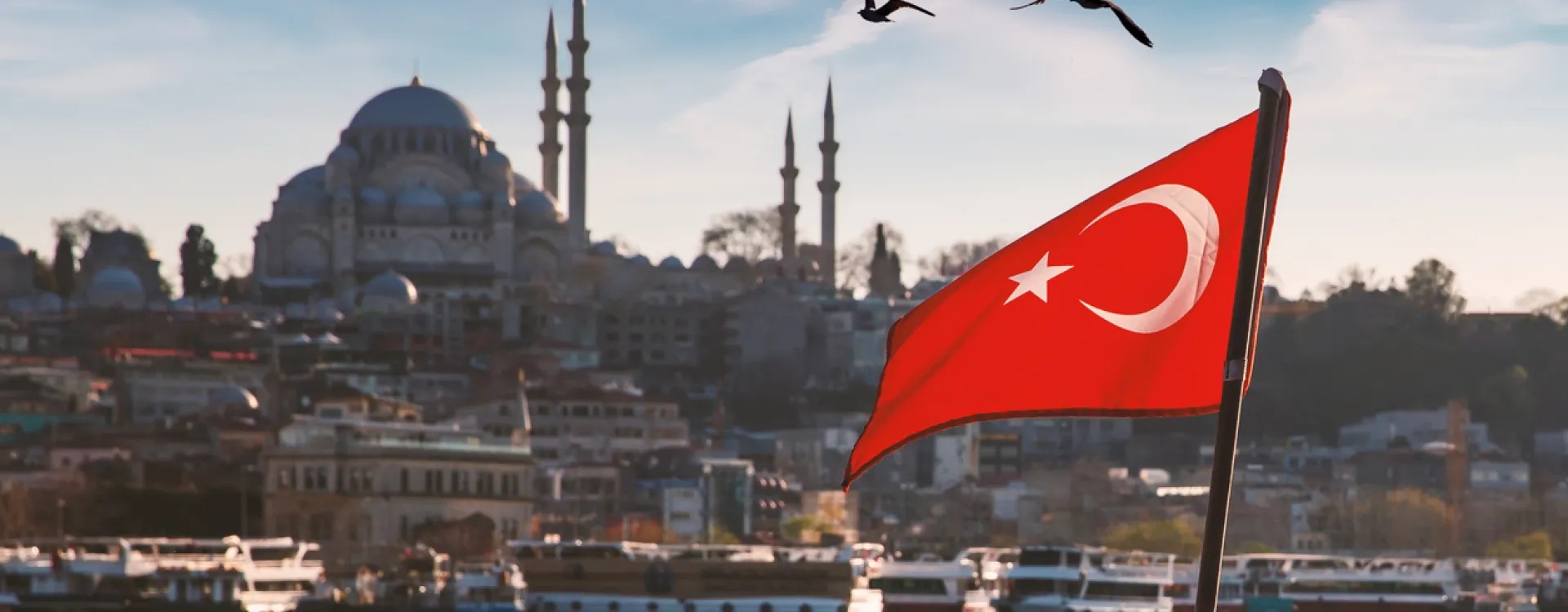
Few countries occupy a geographical position as strategically significant as Türkiye. Stretching across Anatolia and Eastern Thrace, it physically connects Europe and Asia while overlooking the Black Sea, the Aegean Sea and the Mediterranean. It stands at the crossroads of the Balkans, the Caucasus, the Middle East and the Eastern Mediterranean, placing it at the intersection of several of the world's most sensitive geopolitical theatres.
This location is not merely a geographical characteristic; it is the foundation of Turkish statecraft. Control of the Bosporus and the Dardanelles grants Ankara authority over the only maritime gateway between the Black Sea and the Mediterranean. In an era shaped by the war in Ukraine, renewed competition between Russia and NATO, and the growing militarisation of the Black Sea, these waterways have regained exceptional strategic importance.
Rather than belonging exclusively to one geopolitical sphere, Türkiye simultaneously forms part of several. It is European, Mediterranean, Middle Eastern, Black Sea and Eurasian all at once. This multidimensional identity explains much of its foreign policy. Ankara no longer seeks integration into a single geopolitical bloc; instead, it attempts to leverage its multiple identities to maximise its strategic autonomy.
From the Ottoman Empire to the Modern Republic
Modern Türkiye remains profoundly influenced by the legacy of the Ottoman Empire, even though the Republic established by Mustafa Kemal Atatürk in 1923 was deliberately founded upon a political and institutional break with the imperial order.
The Kemalist project aimed to create a secular, centralised and modern nation-state oriented toward the West. The Latin alphabet replaced Arabic script, religious institutions were subordinated to the state, and the armed forces gradually assumed the role of guardians of the republican order.
Throughout the twentieth century, Türkiye integrated itself into the Western institutional architecture. It joined NATO in 1952, became a member of the OECD and developed increasingly close economic ties with Western Europe. Its candidacy for membership of the European Union symbolised this long-standing orientation.
Yet the political evolution of the country during the twenty-first century has gradually reshaped this trajectory. Under President Recep Tayyip Erdoğan, executive authority has been consolidated, the political influence of the military has diminished, and Turkish foreign policy has become markedly more autonomous.
This transformation does not represent a complete departure from the West. Rather, it reflects Ankara's determination to avoid strategic dependence on any single centre of power.
An Industrial and Commercial Power
With a population exceeding 86 million, Türkiye possesses a substantial domestic market, a large labour force and one of the most diversified industrial bases in its region.
Its economy rests upon manufacturing, automotive production, textiles, agriculture, construction, steel, chemicals, tourism and, increasingly, advanced defence industries and technology.
Türkiye has established itself as a major manufacturing platform integrated into European supply chains. International companies produce vehicles, industrial components, consumer goods and electrical equipment within its territory for export across Europe.
Its customs union with the European Union has created deep commercial interdependence despite persistent political disagreements between Ankara and Brussels.
Turkish conglomerates have expanded throughout the Balkans, Central Asia, the Middle East and Africa, while Turkish Airlines has become an important instrument of economic connectivity and diplomatic influence.
Unlike many economies of comparable size, Türkiye is neither dependent upon hydrocarbons nor concentrated around a single export sector. This diversity provides a degree of resilience that distinguishes it from many regional peers.
The Turkish Economic Paradox
Despite its productive capacity, Türkiye continues to face significant macroeconomic imbalances. Persistent inflation, currency depreciation, reliance on external financing and high energy import costs regularly undermine macroeconomic stability. Monetary tightening has reduced inflationary pressures but has not entirely eliminated structural vulnerabilities.
The Turkish paradox lies in the coexistence of a diversified real economy and recurring monetary instability. The country manufactures, exports, innovates and builds sophisticated industrial capabilities, yet it must devote considerable resources to defending its currency, containing inflation and financing external deficits. Industrial strength alone has therefore proved insufficient to guarantee financial stability.
Energy: Vulnerability and Strategic Opportunity
Unlike Russia, Iran or the Gulf monarchies, Türkiye possesses only limited hydrocarbon reserves. This dependence on imported oil and natural gas constitutes one of its principal strategic vulnerabilities, exposing the country to international price volatility and regional instability.
At the same time, Ankara has sought to transform this weakness into geopolitical leverage by positioning itself as a regional energy hub linking Russia, the Caucasus, Central Asia and the Middle East with European markets.
Major pipeline networks already cross Turkish territory, while recent discoveries of natural gas in the Black Sea and the gradual development of civilian nuclear power may partially reduce import dependence over time.
Türkiye therefore occupies an intermediate position: although it remains a significant energy importer, it is increasingly indispensable as a transit state for regional energy flows.
The Rise of a Defence Industrial Power
Perhaps the most remarkable transformation of Turkish power has occurred within the defence sector. Türkiye possesses one of NATO's largest armed forces and occupies a central position on the Alliance's southeastern flank. Its territory hosts critical military infrastructure while overlooking several of the world's most volatile regions.
Over the past two decades, Ankara has pursued an ambitious strategy aimed at reducing dependence on foreign defence suppliers.
This effort has produced a rapidly expanding domestic defence industry capable of manufacturing drones, armoured vehicles, naval vessels, missiles, electronic warfare systems and advanced aerospace technologies.
The Bayraktar drone family has become the most internationally recognised symbol of this transformation following its operational use in several recent conflicts.
Meanwhile, projects such as the KAAN fifth-generation fighter programme, indigenous naval platforms and advanced missile systems demonstrate Türkiye's ambition to become a comprehensive defence manufacturer rather than merely an arms importer.
Defence exports have consequently become not only an economic sector but also an instrument of diplomacy, allowing Ankara to expand its international influence without necessarily deploying its own military forces.
An Ambiguous Relationship with the West
Türkiye remains a member of NATO, and the Alliance continues to constitute a cornerstone of its national security. Yet relations with its Western partners have become increasingly complex. The acquisition of the Russian S-400 air defence system resulted in Türkiye's exclusion from the F-35 fighter programme, illustrating the strategic tensions generated by Ankara's pursuit of greater autonomy.
Disagreements also persist regarding Syria, support for Kurdish forces, democratic governance, Eastern Mediterranean disputes and relations with Greece and Cyprus. Although Türkiye's accession negotiations with the European Union have effectively stalled, neither side can realistically disengage from the other.
The European Union depends upon Turkish cooperation regarding migration, regional security, energy transit, trade and Black Sea stability, while Türkiye relies heavily on European investment, technology and export markets.
Their relationship has therefore evolved into one of profound interdependence without full political integration.
Russia: Partner, Competitor and Strategic Constraint
Relations between Türkiye and Russia perfectly illustrate Ankara's balancing strategy. The two countries cooperate extensively in energy, tourism, trade and civilian nuclear power, while simultaneously supporting opposing actors across multiple conflict zones.
In Syria, Moscow backed the Assad government whereas Ankara supported various opposition groups. In Libya, both countries supported rival factions. In the South Caucasus, Türkiye strengthened Azerbaijan's position, thereby reducing Russia's historical influence in the region.
Following Russia's invasion of Ukraine, Türkiye supplied military equipment to Kyiv while maintaining diplomatic dialogue and substantial economic relations with Moscow.
This approach does not constitute traditional neutrality. Rather, it reflects compartmentalisation: cooperating where interests converge, competing where they diverge, and avoiding direct confrontation whenever possible.
Such flexibility has allowed Ankara to position itself as one of the few actors capable of maintaining meaningful dialogue with both Russia and the Western alliance.
The Middle East and the Pursuit of Regional Influence
Türkiye increasingly seeks recognition as one of the principal powers shaping the Middle East. Its influence combines military presence, commercial networks, humanitarian assistance, cultural diplomacy, historical legacy and growing defence partnerships.
Its priorities remain closely linked to developments in Syria and Iraq, where Ankara seeks to prevent the emergence of hostile Kurdish entities near its borders, facilitate regional stabilisation and manage migration pressures.
Türkiye also continues to host one of the world's largest refugee populations, creating significant economic, social and political challenges.
Beyond its immediate neighbourhood, Ankara has repeatedly sought to position itself as a mediator capable of facilitating dialogue between opposing actors in conflicts ranging from Ukraine to the Caucasus and the broader Middle East.
Rather than merely reacting to regional crises, Türkiye increasingly attempts to shape the political order that follows them.
Beyond Its Immediate Neighbourhood
Turkish foreign policy extends well beyond its surrounding regions. In the Balkans, Ankara maintains strong historical, economic and cultural relationships with several countries once integrated into the Ottoman sphere.
In the South Caucasus, its strategic partnership with Azerbaijan has significantly reshaped regional power balances. Across Central Asia, Türkiye has promoted closer cooperation among Turkic-speaking nations through the Organization of Turkic States, strengthening economic, political and cultural ties.
Meanwhile, Africa has become another major axis of Turkish diplomacy. The rapid expansion of diplomatic missions, commercial investment, defence agreements and transport links reflects Ankara's determination to diversify its international partnerships beyond its traditional Western orientation.
Strategic Autonomy as a National Doctrine
Contemporary Turkish foreign policy is ultimately driven by a single overarching concept: strategic autonomy. Ankara does not seek withdrawal from Western institutions. Instead, it aims to preserve freedom of action while remaining engaged with multiple centres of power.
This doctrine rests upon industrial self-sufficiency, diversified partnerships, military modernisation, infrastructure control and the reduction of excessive external dependence.
Türkiye cooperates with NATO without automatically aligning with Washington. It engages Russia without becoming a Russian ally. It negotiates with the European Union without considering accession its sole strategic objective. It simultaneously expands relations with China, the Gulf states, Africa and Central Asia.
Such flexibility offers considerable advantages within an increasingly multipolar international system. However, balancing between competing powers also entails risks. Attempting to preserve every option may ultimately generate distrust among all partners.
Domestic Challenges
Türkiye's external ambitions cannot be separated from its internal political dynamics. Questions surrounding democratic governance, judicial independence, media freedom and institutional balance continue to shape domestic debate.
The Kurdish issue remains one of the country's most enduring strategic challenges, encompassing political, security, social and cross-border dimensions.
Turkish society is also characterised by persistent divisions between secular and conservative constituencies, metropolitan and rural populations, and differing visions of the country's place in the international order.
These internal tensions do not prevent Türkiye from exercising influence abroad, but they do affect the long-term sustainability of its strategic ambitions.
The Limits of Turkish Power
Türkiye possesses many of the traditional attributes of a regional power: demographic weight, industrial capacity, military strength, strategic geography and diplomatic activism.
Yet these strengths coexist with important structural limitations. Currency instability constrains economic policy. Energy dependence increases vulnerability to external shocks. Political polarisation may discourage investment and contribute to talent outflows. Sustained military engagements across multiple theatres impose growing financial and diplomatic costs.
Türkiye therefore remains a major regional actor rather than a global superpower. Its future influence will depend less upon dominating its environment than upon maintaining its position as an indispensable partner for multiple competing powers.
Conclusion
Türkiye has emerged as one of the most influential middle powers in the contemporary international system. Its strength lies not merely in its military, economy or population, but in its ability to combine geography, diplomacy, industry and strategic flexibility into a coherent model of national power.
Situated simultaneously between Europe and Asia, NATO and Russia, the Mediterranean and the Middle East, Türkiye occupies a unique position that few states can replicate.
This strategic location constitutes both its greatest advantage and its greatest challenge. Ankara must constantly balance alliances with autonomy, economic integration with political independence, regional ambitions with financial constraints and domestic cohesion with international activism.
In an international order increasingly characterised by fragmentation and geopolitical competition, this capacity to navigate multiple centres of power may become one of Türkiye's greatest strategic assets.
Türkiye is not yet a global power in the traditional sense. It has, however, become a state whose strategic choices no major power can afford to ignore.
Atlas Observer Research Desk
Atlas Observer’s editorial and analytical desk.