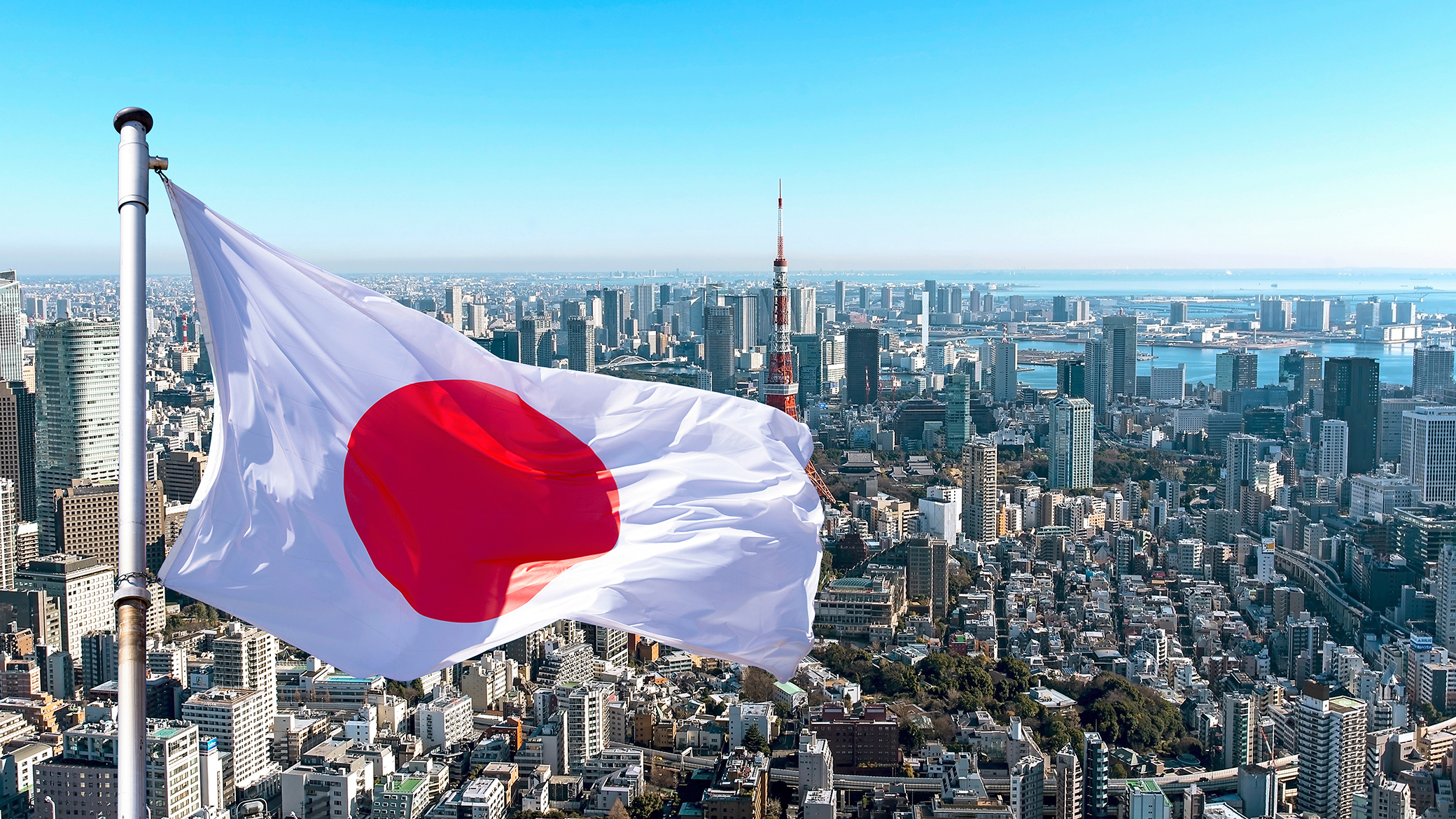
For more than seventy years, Japan has occupied a distinctive position in the global balance of power. The world’s third-largest economy for several decades, a laboratory of technological innovation, a major industrial power and an essential diplomatic actor in the Indo-Pacific, the archipelago has profoundly shaped contemporary economic history.
Yet behind this image of stability lies a country undergoing a deep transformation. Demographic ageing, slower growth, intensifying technological competition, regional geopolitical tensions and the energy transition are now forcing Tokyo to reconsider some of the foundations of its model.
Far from being a power in irreversible decline, Japan today appears as a state seeking to adapt its historical strengths to an international environment that has become more unstable, competitive and fragmented.
An Economic Power Built on Industry and Innovation
Japan’s post-war economic miracle remains one of the most remarkable transformations of the twentieth century. In only a few decades, a country devastated by war became one of the world’s leading industrial economies.
This success rested on several pillars: strong investment capacity, a highly specialised manufacturing sector, a culture of quality, an effective education system and close cooperation between major corporations, banks and the state.
Despite recording more moderate growth than emerging economies, Japan remains one of the world’s principal economic powers.
Its companies continue to hold leading positions in numerous sectors:
- automotive manufacturing;
- industrial robotics;
- electronic equipment;
- machine tools;
- fine chemicals;
- advanced materials;
- precision optics;
- electronic components.
Groups such as Toyota, Sony, Mitsubishi, Hitachi, Canon, Panasonic, Nintendo and Keyence illustrate Japan’s ability to remain highly competitive in industries requiring substantial technological expertise.
Contrary to a common perception, Japanese competitiveness no longer rests primarily on mass production, but on the mastery of highly specialised, high-value industrial segments.
A Technological Power Seeking to Preserve Its Advantage
Japan remains one of the world’s largest investors in research and development. Its technological excellence is evident in several strategic fields:
- industrial robotics;
- factory automation;
- precision sensors;
- applied artificial intelligence;
- batteries;
- innovative materials;
- advanced medicine;
- space technologies.
Automation has become a direct response to demographic ageing. While other countries compensate for labour shortages through immigration, Japan has largely prioritised productivity gains generated by technology.
Tokyo has also launched a strategy to rebuild its position in the semiconductor industry. After losing part of its global leadership during the 2000s, the government is now heavily supporting investment designed to secure supply chains and attract new international manufacturers.
This strategy extends beyond economic policy. It has become an essential component of national technological sovereignty.
A Geopolitical Power Once Again Central to the Indo-Pacific
For several decades, Japan pursued a primarily economic form of diplomacy, while relying heavily on its alliance with the United States for military security. The evolution of the regional strategic environment is gradually changing this posture.
China’s military rise, North Korean ballistic missile tests, tensions surrounding Taiwan and the intensifying rivalry between Washington and Beijing have placed Japan at the centre of Asia’s security balance.
Tokyo is progressively strengthening its defence capabilities through:
- a historic increase in military expenditure;
- modernisation of the Self-Defense Forces;
- development of counter-strike capabilities;
- deeper cooperation with the United States;
- expanded partnerships with Australia, India, the United Kingdom and several European countries.
Without formally abandoning its pacifist Constitution, Japan is adopting a broader interpretation of its strategic responsibilities.
The objective is clear: to preserve stability in the Indo-Pacific while safeguarding the maritime routes on which a large share of the Japanese economy depends.
Demography: Japan’s Principal Structural Challenge
Few advanced economies face a demographic transformation as profound as Japan’s. The combination of a low birth rate, one of the world’s highest life expectancies and relatively limited immigration is leading to a gradual contraction of the working-age population. This transformation has several consequences:
- weaker potential economic growth;
- labour-market shortages;
- rising healthcare expenditure;
- growing pressure on the pension system;
- increasing strain on public finances.
Japan is attempting to address these challenges through several instruments:
- greater automation;
- productivity improvements;
- longer participation in employment;
- increased participation of women in the workforce;
- a gradual but still limited opening to skilled immigration.
This strategy reflects a desire to preserve social cohesion while limiting the disruptions that could accompany a rapid demographic transition.
An Energy-Constrained Power
Japan possesses few natural resources. This structural characteristic has shaped its economic policy for decades. The archipelago remains heavily dependent on imports for its supplies of:
- oil;
- liquefied natural gas;
- coal;
- industrial raw materials.
The Fukushima disaster in 2011 profoundly altered the national energy debate. The shutdown of much of Japan’s nuclear fleet increased dependence on imported fossil fuels, while raising carbon emissions and the cost of energy imports. In recent years, Tokyo has adopted a more pragmatic approach. The government is seeking simultaneously to:
- restart selected nuclear reactors;
- expand renewable energy;
- invest in hydrogen;
- improve energy efficiency;
- secure international supply arrangements.
Energy security has therefore become a major component of national strategy.
A Society Between Tradition and Modernity
Japan remains one of the most distinctive societies among the world’s advanced economies. Technological innovation coexists with strong cultural continuity. Respect for institutions, the importance of collective responsibility, the pursuit of quality, consensus-based decision-making and social stability continue to influence both economic life and public governance.
At the same time, younger generations are gradually transforming social behaviour. Consumption patterns are evolving, careers are becoming less linear and expectations regarding work are changing, bringing Japan closer to trends already visible across other advanced economies.
This ability to incorporate change without abrupt disruption is probably one of the principal strengths of the Japanese model.
Japan in the Emerging World Order
The transformation of the international system is creating new opportunities, but also new constraints. Faced with the strategic rivalry between the United States and China, Japan is seeking to preserve a delicate balance. Its alliance with the United States remains the foundation of its security. At the same time, China remains one of its most important trading partners.
This dual dependence requires Tokyo to pursue a particularly pragmatic foreign policy. Japan is also reinforcing its influence through:
- the G7;
- the Quad;
- the Comprehensive and Progressive Agreement for Trans-Pacific Partnership;
- international financial institutions;
- cooperation with ASEAN.
This strategy enables Japan to exercise influence beyond what its military capabilities alone would suggest. Its international weight rests to a large extent on economic credibility, institutional stability, technological expertise and the confidence it inspires among its partners.
Conclusion
Japan illustrates a reality that is often underestimated: power cannot be measured solely through economic growth or military capabilities.
It also derives from institutional quality, technological mastery, industrial resilience, political stability and the ability to adapt to global change.
Confronted with unprecedented demographic pressures, intensifying technological competition and a more uncertain geopolitical environment, Japan is not attempting to recreate the model that drove its success during the 1980s. It is gradually constructing a new form of power, based more heavily on innovation, economic security and strategic cooperation.
In a twenty-first century marked by fragmented value chains, competition for critical technologies and the return of power politics, Japan remains one of the most stable, credible and influential actors in the international order.
Main Sources
- International Monetary Fund — World Economic Outlook and macroeconomic statistics.
- World Bank — Development indicators and economic data.
- Organisation for Economic Co-operation and Development — Economic Surveys of Japan.
- Bank of Japan — Monetary and financial reports.
- Japan Ministry of Economy, Trade and Industry.
- Japan Ministry of Defense — Defence white papers.
- Japan Ministry of Foreign Affairs.
- United Nations — World Population Prospects.
- International Energy Agency.
- World Intellectual Property Organization.
Atlas Observer Research Desk
Atlas Observer’s editorial and analytical desk.