
An organization never operates solely through procedures, organizational charts, or performance indicators.
It also operates through invisible human dynamics: relationships to power, fear of risk, the search for recognition, internal rivalries, cultures of silence, trust, loyalty, or collective fatigue.
Two organizations with identical resources can produce radically different outcomes simply because their internal psychology is not the same.
This is often where the gap emerges between theoretical performance and actual performance.
Organizational psychology studies precisely these mechanisms: how individuals behave within collective structures, how groups influence decisions, and how internal cultures shape the long-term effectiveness of institutions.
Because over time, organizations develop their own personality. Some become:
— excessively hierarchical, — overly risk-averse, — dependent on a small number of decision-makers, — incapable of internal contradiction, — or, conversely, adaptive, fluid, and resilient.
The paradox is that the most dangerous dysfunctions are rarely technical. They are often psychological. Common patterns include:
— decisions delayed by fear of failure, — information filtered to protect hierarchies, — meetings where nobody challenges a visibly flawed direction, — territorial conflicts between departments, — or the gradual loss of collective purpose in favor of individual logic.
Over time, these dynamics generate:
— slower decision-making, — declining innovation, — demotivation, — operational rigidity, — and in some cases, governance crises.
The issue becomes even more critical in large organizations, where the distance between operational reality and decision-making centers naturally increases.
The larger an organization becomes, the greater the risk of:
— bureaucratizing its reflexes, — isolating leadership from operational realities, — and transforming internal conformity into a higher priority than actual effectiveness.
Technology and AI do not eliminate these mechanisms. In some cases, they may even amplify them:
— information overload, — increased surveillance, — excessive standardization, — loss of autonomy, — dependence on metrics, — and the dilution of human responsibility behind systems.
The issue extends far beyond the private sector.
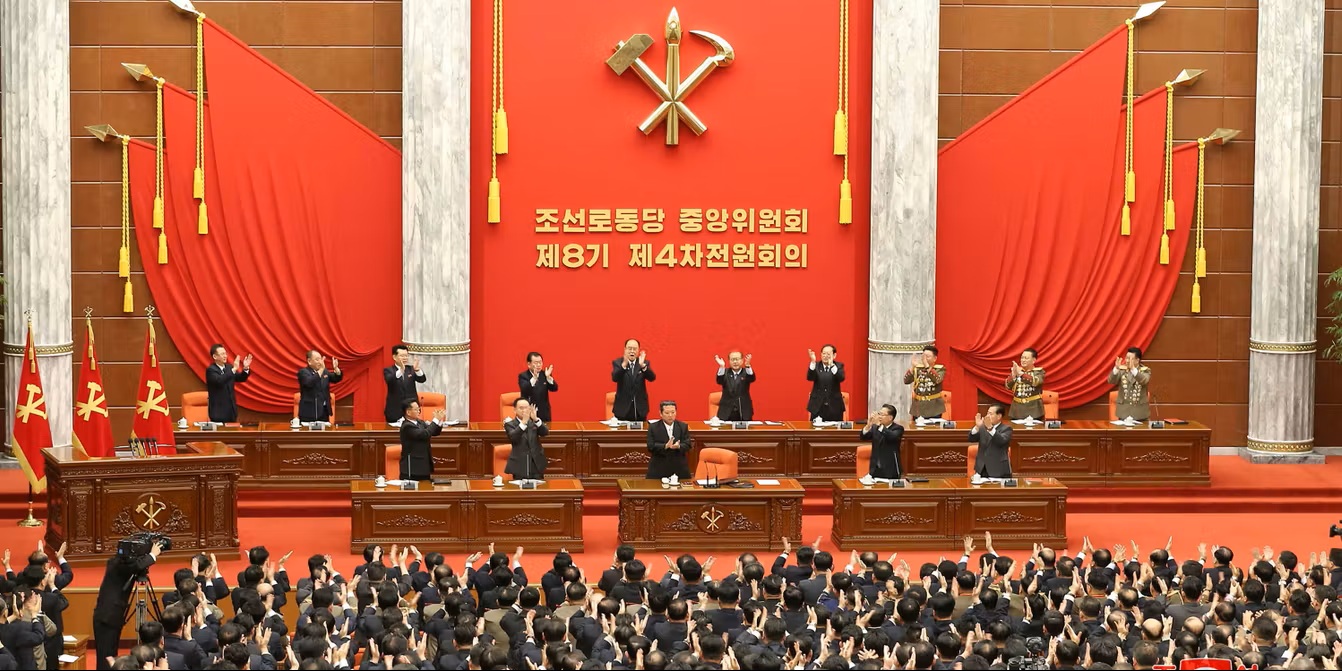
States, administrations, international institutions, militaries, political parties, media organizations, and large digital platforms also develop distinct organizational behaviors.
Understanding the psychology of organizations is therefore not only about understanding individuals.
It is about understanding how structures themselves gradually influence thought, decision-making, and collective behavior.
And in a world where systems are becoming increasingly complex, this psychological dimension is progressively turning into a major strategic factor.
Atlas Observer Research Desk
Atlas Observer’s editorial and analytical desk.