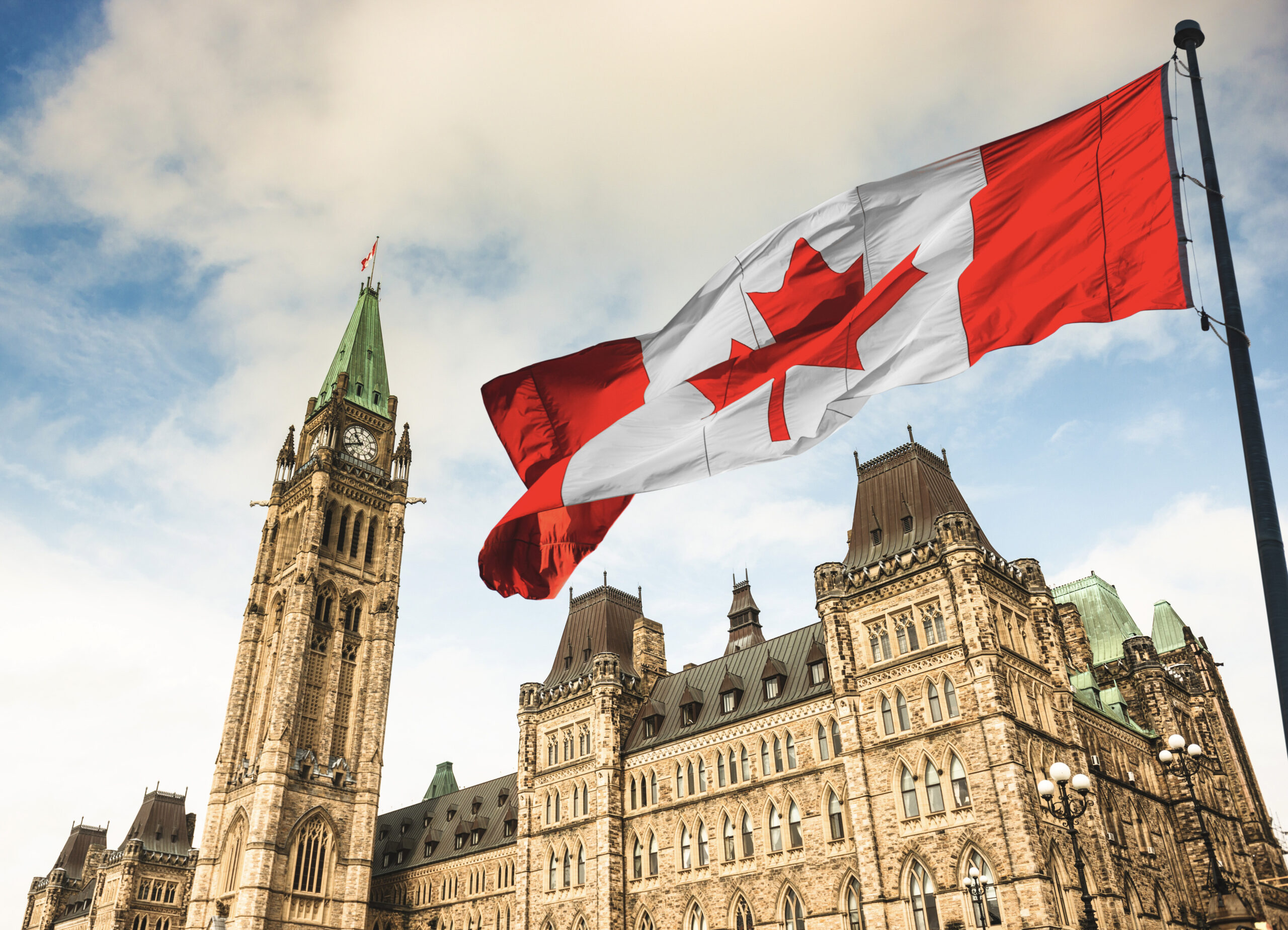
Canada is often perceived as a stable and prosperous country, relatively distant from the major tensions shaping international affairs. Yet this image conceals a more complex reality. Through its geography, natural resources, economic weight, proximity to the United States and diplomatic role, Canada occupies a strategic position in the contemporary global order.
The world’s second-largest country by land area after Russia, Canada is a member of the G7, NATO, the G20, the Commonwealth and La Francophonie, as well as one of the United States’ most important partners. Its influence therefore extends far beyond its demographic weight.
At a time of intensifying rivalry between major powers, accelerating energy transition, technological transformation and growing access to the Arctic, Canada’s strategic importance is increasing.
A Continental Territory of Exceptional Scale
Covering nearly 10 million square kilometres, Canada accounts for approximately 6.7 percent of the world’s land area. Its territory stretches from the Atlantic Ocean to the Pacific and northward to the Arctic Ocean. This position gives the country three major maritime frontiers and a substantial presence in a region likely to become one of the most strategically important spaces of the twenty-first century: the Arctic.
Canada also shares the world’s longest international land border with the United States, extending for approximately 8,900 kilometres. This proximity profoundly shapes the country’s economy, security policy and international relations.
A Modest but Rapidly Growing Population
Canada has a population of approximately 42 million. On a global scale, this remains a relatively small population compared with the immense size of the country. However, Canada has experienced one of the fastest rates of population growth among advanced economies.
This expansion has been driven largely by an ambitious immigration policy intended to address population ageing and labour-market needs. Multiculturalism has become one of the defining characteristics of the Canadian model.
More than 80 percent of the population lives within roughly 200 kilometres of the border with the United States. This southern corridor includes the country’s major urban centres, such as Toronto, Montreal, Vancouver, Calgary, Ottawa and Edmonton.
One of the World’s Most Advanced Economies
With a gross domestic product exceeding US$2.4 trillion, Canada ranks among the world’s ten largest economies. Its income per capita is well above the global average, while its economy is supported by several complementary sectors.
Services generate close to three-quarters of national output. Manufacturing also remains important, particularly in the automotive, aerospace, advanced technology and industrial equipment sectors.
Canada’s financial industry, dominated by a small number of highly regulated banks, is frequently regarded as one of the most resilient in the world.
The Canadian economy nevertheless remains deeply integrated with that of the United States. Nearly three-quarters of Canadian exports are destined for the US market, illustrating an exceptionally high degree of interdependence between the two economies.
A Natural-Resource Superpower
One of Canada’s greatest strengths lies in its exceptional abundance of natural resources. The country is among the world’s leading producers of oil, natural gas, uranium, potash, nickel, cobalt, aluminium, timber, wheat and numerous strategic minerals.
The oil sands of Alberta represent one of the largest proven petroleum reserves in the world. Canada is also a major producer of hydroelectric power. Electricity generated by dams accounts for a substantial share of the national energy mix and provides the country with a relatively low-carbon source of power.
As the global energy transition accelerates, the critical minerals produced in Canada are becoming increasingly important to the supply chains of batteries, electric vehicles, electricity grids and digital technologies.
An Energy Power in Transition
Canada reflects many of the contradictions of the global energy transition. On the one hand, it is one of the world’s major exporters of hydrocarbons.
On the other, it already benefits from one of the least carbon-intensive electricity systems among advanced economies, largely because of hydroelectric and nuclear generation. It is also expanding its capacity in wind power, solar energy, hydrogen and small modular nuclear reactors.
This dual reality requires Canada to balance economic competitiveness, energy security and climate objectives.
Diplomatic Influence Through Multilateralism
For decades, Canada has favoured a foreign policy based on international cooperation. The country has played an active role in peacekeeping operations, international institutions and global governance frameworks. Its simultaneous membership in the G7, G20, NATO, the OECD, the Commonwealth, La Francophonie and numerous other organisations gives it an unusually dense diplomatic network.
This multilateral approach allows Canada to exercise an influence greater than its population or military power alone would suggest.
Relations with the United States: Strategic Interdependence
Relations with the United States are arguably the most important structural factor in Canadian policy. The two countries maintain one of the largest bilateral trading relationships in the world. Every day, billions of dollars in goods and services cross their shared border.
This proximity creates major economic advantages, but it also generates significant dependence. Decisions taken in Washington regarding trade, energy, industrial policy or security often have direct consequences for the Canadian economy.
The permanent challenge for Ottawa is therefore to preserve political autonomy while maintaining a very high level of economic integration with its principal partner.
The Arctic: A New Strategic Frontier
Climate change is gradually transforming the Arctic. The retreat of sea ice is opening new maritime routes, facilitating access to natural resources and intensifying competition among regional and global powers.
Canada controls one of the largest Arctic territories in the world. Sovereignty over the Northwest Passage, northern infrastructure, polar military capabilities and the protection of Indigenous communities are becoming increasingly important strategic priorities.
As Russia strengthens its Arctic presence and China expands its interest in the region, the Arctic may become one of the principal geopolitical arenas of the twenty-first century.
Innovation, Artificial Intelligence and the Knowledge Economy
Canada has invested heavily in advanced technologies over the past several decades. Montreal, Toronto, Waterloo and Vancouver have developed dynamic ecosystems in artificial intelligence, biotechnology, cybersecurity and quantum technologies.
Canadian researchers played an important role in the development of deep learning and other major advances in artificial intelligence. The country is now attempting to convert its scientific strengths into industrial leadership and greater international competitiveness.
The Main Structural Challenges
Despite its considerable advantages, Canada faces several major structural challenges. Housing affordability has become a serious problem in many metropolitan areas. Economic disparities between provinces remain significant. Productivity growth has been weaker than in several comparable economies.
Dependence on the US market continues to limit trade diversification. Canada is also increasingly exposed to the consequences of climate change, including wildfires, droughts and rapid environmental transformation in the northern regions. Responding to these pressures will require sustained public and private investment.
A Country Likely to Gain Strategic Importance
The twenty-first century may strengthen Canada’s position in the global balance of power. Growing demand for critical minerals, concerns over energy security, technological competition, emerging Arctic shipping routes and the reorganisation of global supply chains all place the country at the intersection of major structural transformations.
Canada does not seek to behave like a traditional military great power. Nevertheless, it possesses a rare combination of advantages: political stability, strong institutions, a highly educated population, abundant natural resources, substantial innovation capacity and broad international credibility.
In a world where resilience is becoming as important as raw power, these characteristics could make Canada one of the most influential middle powers of the coming decades.
Atlas Observer Research Desk
Atlas Observer’s editorial and analytical desk.