Europe occupies a paradoxical position in the contemporary world. It remains one of the planet’s principal centres of wealth, consumption, scientific production and institutional stability. It possesses powerful companies, advanced infrastructure, a highly educated population and a continental market capable of shaping global economic standards. Yet whenever an international crisis requires rapid decision-making, a common strategy or the coordinated mobilisation of political, industrial and military resources, its limitations become immediately visible.
This paradox cannot be understood through the idea of European decline alone. Europe does not lack economic resources or human capabilities. Its main difficulty lies in converting those resources into collective power. It is a deeply integrated space without being a state, a commercial power without a fully unified diplomacy, and a group of militarily developed nations without a genuine common strategic command. It possesses several attributes of power, but not the single political authority required to direct them towards the same objective.
European history can therefore be understood as a long transition between two incomplete forms of power. For centuries, the continent dominated much of the world through the strength of its states, but at the cost of permanent rivalries and recurring wars. Since 1945, it has succeeded in pacifying its internal relations and integrating its economies, but without building a political sovereignty equivalent to its economic weight. Europe replaced the power of its empires with the power of its market, without fully resolving the question of strategic unity.
Fragmentation as the driving force of European history
Europe never developed as a homogeneous political entity. Unlike other major historical regions that were durably organised around a central imperial authority, it remained divided among kingdoms, principalities, city-states, empires, merchant republics and religious powers. No authority succeeded in permanently controlling the entire continent. Even the most ambitious projects of unification, from the Roman Empire to the Napoleonic conquests, failed to eliminate this plurality.
This fragmentation was long a source of weakness. It generated continuous conflict, immense destruction and permanent military competition. Yet it also encouraged a particular form of dynamism. Sovereigns, cities and institutions were placed in competition with one another. Merchants, scholars, artists and entrepreneurs could move from one territory to another when political conditions became unfavourable. Innovations circulated among several centres of power without depending entirely on a single authority.
The Renaissance, the Scientific Revolution, the development of modern finance and industrialisation did not emerge within a unified space. They arose in a fragmented continent where states constantly sought an advantage over their rivals. Progress in navigation responded to commercial competition. Military innovation strengthened state consolidation. Scientific advances were supported by courts, universities and institutions seeking prestige. European political fragmentation therefore produced a permanent tension between destruction and innovation.
This competition gradually encouraged the creation of more efficient administrative systems, more developed fiscal structures and financial institutions capable of funding wars, infrastructure and commercial expansion. European power was not built solely in laboratories, universities or factories. It also emerged from conflict among states, from the need to raise taxes, organise armies, secure maritime routes and mobilise capital.
Modern Europe was born from this contradiction. Its division long prevented it from becoming a unified continental empire, but it also created the conditions for a competition that accelerated its scientific, economic and institutional development.
From continental competition to global domination
From the fifteenth century onward, rivalry among European powers progressively extended beyond the continent. Maritime routes opened towards Africa, Asia and the Americas transformed the scale of competition. European states no longer competed only for territory within Europe. They now sought to control oceans, resources, markets and the main routes of global trade.
This expansion helped shift the economic centre of gravity from the Mediterranean to the Atlantic. European ports became the connection points of an increasingly extensive commercial system. Flows of precious metals, agricultural products, raw materials and manufactured goods strengthened the financial and military capacities of European powers. Trading companies, banks and financial markets supported this expansion by creating new forms of capital mobilisation.
Industrialisation then widened the gap between Europe and much of the rest of the world. Mechanised production, large-scale coal extraction, railway development and rising productivity gave European powers a considerable economic and military advantage. European states became capable of producing more, moving their armies more rapidly and projecting influence over long distances.
This domination, however, did not result from scientific and industrial progress alone. It also rested on conquest, coercion and exploitation. Colonial empires supplied raw materials, commercial outlets and strategic positions. Colonised populations were subjected to political and economic systems designed around the interests of imperial powers. Borders were redrawn, productive structures were transformed and local societies were integrated unequally into a world economy dominated by Europe.
European power reached its height in the nineteenth century, but remained deeply fragmented. The continent dominated much of the world without itself forming a unified whole. European empires cooperated when it suited their interests, but remained engaged in permanent competition. External expansion did not eliminate internal rivalry. It extended it to the global level.
The first half of the twentieth century exposed the fragility of this system. The two world wars were not external accidents in European history. They were the culmination of an order built on competition among powers, nationalism, military alliances and the pursuit of strategic superiority. Europe had developed an exceptional capacity to organise power, but remained unable to contain conflict among its own states.
The destruction of the old Europe of powers
The two world wars ended Europe’s political centrality. The continent’s leading powers emerged weakened, indebted and materially devastated. Their colonial empires began to disappear, while the United States and the Soviet Union became the two dominant poles of the international order.
Europe gradually ceased to be the centre from which global power relations were organised. It instead became one of the principal arenas of rivalry between the two superpowers. The continent was divided between East and West, while its security largely depended on alliance systems dominated from outside Europe.
This historical rupture imposed a profound transformation. After having long built their power through competition, several European states chose to preserve their security through integration. The initial objective was not to create a European state immediately, but to make another war materially and politically more difficult. Economic interdependence was intended to replace confrontation.
European integration therefore rested on an inversion of the continent’s historical logic. The sectors that had sustained warfare were placed under forms of common control. Trade barriers were progressively reduced. National economies became increasingly integrated. Law became one of the main instruments regulating relations among member states.
This transformation represents one of the most significant political achievements of contemporary European history. Countries that had fought one another for centuries created a space based on negotiation, circulation and interdependence. Power was no longer pursued through the conquest of neighbouring territory, but through the expansion of a common market and the construction of shared institutions.
Europe thus succeeded in resolving part of its historical problem. It substantially reduced the risk of war among its leading powers and created the conditions for lasting prosperity. Yet it did not fully resolve the question of sovereignty.
A market before a power
European integration developed primarily through economics. Market integration advanced more rapidly than political unification. Trade, investment and the movement of people were organised on a continental scale, while diplomacy, defence, taxation and industrial policy remained largely dependent on national governments.
This architecture made it possible to move forward without requiring the disappearance of national sovereignty. It enabled deep integration among countries attached to their institutions, languages, political traditions and distinct interests. But it also created a hybrid system, sufficiently integrated to limit the economic autonomy of states, yet not centralised enough to act as a unified power.
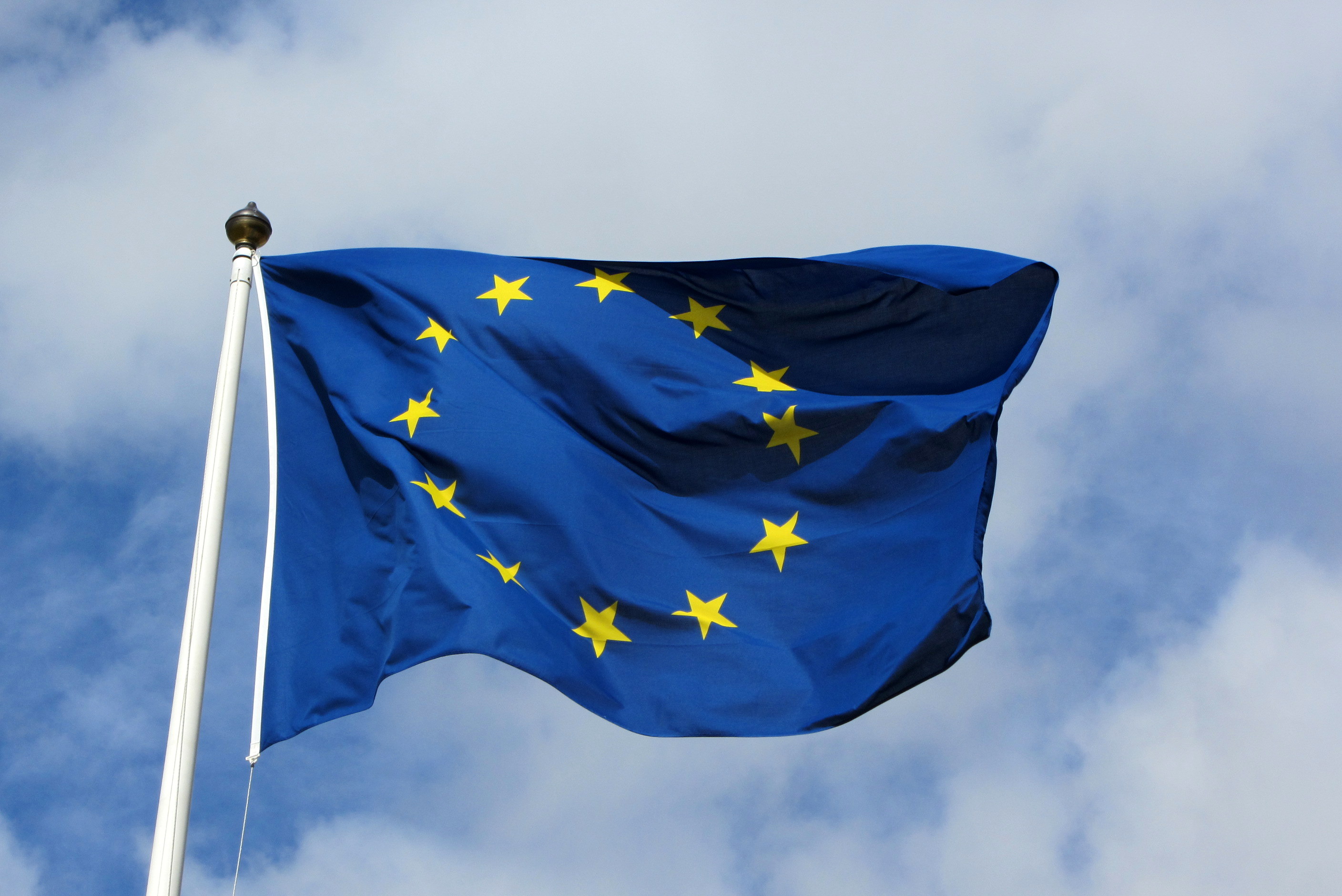
The European Union possesses a common trade policy and negotiates collectively with its partners. It has a vast internal market and a currency shared by many of its members. It produces standards that apply to companies seeking access to its market. It can exercise real economic influence through regulation, sanctions, trade agreements and competition policy.
Yet when the issues concern war, energy, security, strategic industry or relations with major powers, national interests re-emerge. Member states do not always perceive threats in the same way. Their history, geography and economic dependencies shape their positions. Some prioritise the transatlantic relationship, while others place greater emphasis on European autonomy. Some see military security as the principal urgency, while others focus on economic, migration or energy concerns.
Europe therefore appears particularly effective in areas where law, trade and regulation can produce results. It becomes far less coherent when power requires rapid decision-making, political risk-taking or the coordinated use of military and industrial capabilities.
Monetary sovereignty without political sovereignty
The single currency illustrates this contradiction particularly clearly. The euro is one of the world’s leading currencies and a major symbol of European integration. It facilitates trade, reduces transaction costs and enhances the economic visibility of the euro area.
A currency, however, is not merely an economic instrument. It is traditionally linked to a political authority capable of raising taxes, transferring resources, issuing debt and responding to crises. In the euro area, monetary policy is centralised, while fiscal policies remain largely national. States share a currency without fully sharing economic risks, public debt or social models.
This separation creates tensions when national economies evolve differently. The same monetary policy must apply to countries with different levels of productivity, industrial structures and fiscal positions. Mechanisms of solidarity exist, but remain more limited than those found in a federal state.
Successive crises have led European institutions to develop new common instruments. Yet these advances often occur under the pressure of emergency and remain subject to complex negotiations. Europe generally moves forward when crisis makes inaction more costly than compromise. This method allows integration to continue, but it also creates the image of a reactive rather than fully strategic system.
The euro therefore demonstrates the ability of European states to transfer a significant part of their sovereignty. At the same time, it reveals the difficulty of completing that transfer through genuine common political and fiscal authority.
Defence as the central limit of integration
Military affairs probably provide the clearest expression of Europe’s incompleteness. The states of the continent collectively possess considerable capabilities, but these remain divided among multiple armies, doctrines, weapons systems and chains of command.
This fragmentation creates duplication, limits economies of scale and complicates coordination. Defence decisions are taken nationally even though threats often cross borders. European defence industries remain fragmented as well, with each state frequently seeking to preserve its own companies, jobs and sovereign capabilities.
The North Atlantic Treaty Organization remains the principal framework of collective defence for most European Union countries. It has helped guarantee the continent’s security for decades, but relies heavily on American capabilities. The United States plays a central role in intelligence, deterrence, strategic transport, communications and military coordination.
This dependence does not mean that Europe lacks military capability. It means that its capabilities are not fully organised to function autonomously. European armed forces can intervene, but their ability to sustain a major operation without external support remains limited.
The issue of European strategic autonomy is therefore not simply a matter of opposing Europe to the United States. It concerns the continent’s ability to defend its interests when American and European priorities do not fully coincide. An alliance can remain essential while dependency persists. Sovereignty begins precisely when that dependency can be controlled.
An industrial power facing strategic dependencies
Europe retains a significant industrial base. It remains competitive in aerospace, pharmaceuticals, chemicals, automobiles, industrial equipment, energy, luxury goods and several advanced technologies. Its problem is not the complete absence of industry, but the gradual weakening of certain strategic value chains.
Globalisation was long perceived as a means of reducing costs and improving economic efficiency. European companies distributed production across several regions of the world, while governments assumed that international markets would remain accessible. Recent crises exposed the limits of this logic. Supply disruptions, geopolitical tensions and the growing use of trade as an instrument of power revealed the vulnerability created by industrial dependencies.
Europe depends on external suppliers for part of its energy, critical minerals, electronic components and digital technologies. It may control sophisticated segments of value chains without necessarily controlling all the infrastructure, raw materials and platforms required for them to function.
This situation is particularly visible in the digital economy. Europe has researchers, engineers and innovative companies, but most leading global platforms, cloud infrastructure providers and technology firms are American or Asian. The continent has developed a strong capacity to regulate technology without always possessing the companies capable of dominating it commercially.
The difference between regulatory power and productive power is therefore becoming central. Regulation can protect rights, organise markets and limit abuses. But standards do not replace industrial mastery. A power that defines rules without controlling the technologies to which they apply risks becoming permanently dependent on the actors it regulates.
Europe is sometimes more comfortable managing the consequences of technological transformation than leading it. It knows how to create sophisticated rules, but has greater difficulty rapidly mobilising capital, industry and public procurement to support the emergence of global champions.
Its regulatory power remains a major asset. But it cannot indefinitely substitute for technological, industrial and strategic power.
Energy as a strategic indicator
Energy occupies a fundamental place among Europe’s limitations. The continent’s industrial development long relied on abundant and relatively accessible resources. Yet the depletion of some domestic resources and differing national energy choices gradually increased external dependence.
Europe imports a substantial share of the hydrocarbons it consumes. This dependence exposes its economies to price fluctuations, international crises and decisions made by supplier countries. It also affects industrial competitiveness when European energy costs remain persistently higher than those of competitors.
The energy transition may reduce some of these vulnerabilities by expanding domestic electricity production and lowering dependence on fossil fuels. But it also creates new needs for networks, storage capacity, equipment and critical minerals. Energy sovereignty therefore does not simply consist of replacing one energy source with another. It requires control over the technologies, infrastructure and supply chains associated with the transition.
Differences among national energy policies complicate this transformation. European states have not made the same choices regarding nuclear power, gas, renewable energy or the pace of emissions reduction. This diversity reflects genuine economic and political constraints, but limits the ability to build a fully coherent continental energy strategy quickly.
Energy therefore reveals a broader characteristic of the European model. The continent often identifies common challenges accurately, but retains fragmented responses when national interests remain strongly engaged.
Normative power and its limits
Europe exercises considerable global influence through law. The size of its market forces many international companies to comply with European standards even when operating outside the continent. European rules concerning competition, personal data, the environment, consumer rights and product safety frequently extend beyond the Union’s borders.
This capacity constitutes a genuine form of power. It allows Europe to influence global practices without relying on military coercion. It also reinforces its image as a region committed to law, individual protection and the regulation of markets.
This influence, however, has limits. Regulation is most effective when the companies concerned seek access to the European market. It becomes less decisive when technologies, resources or strategic infrastructure are controlled by other powers. The ability to set rules then depends on preserving the attractiveness and economic weight of the market.
Excessive regulation can also slow innovation or discourage investment when it imposes disproportionate costs on European companies. The challenge is therefore not to choose between regulation and innovation, but to create a framework that protects collective interests without weakening the continent’s productive capacity.
Europe is sometimes more comfortable organising the consequences of technological change than leading it. It knows how to construct sophisticated regulatory systems, but struggles more to mobilise capital, industry and public demand rapidly enough to create global leaders.
Its normative power remains highly significant. But it cannot permanently replace technological, industrial and strategic strength.
Demography and the gradual reduction of strategic room for manoeuvre
Demography represents another structural constraint. Population ageing is progressively transforming the continent’s economic and social balances. The relative decline of the working-age population limits potential growth, while the rising number of older people increases healthcare and pension expenditure.
The European social model long depended on a combination of economic growth, productivity and solidarity between generations. When the working population grows more slowly and economic growth weakens, financing that model becomes more difficult. Governments must then choose among higher taxation, reduced benefits, longer working lives or greater reliance on debt.
Immigration can help ease labour shortages, but it is not an automatic solution. Its effects depend on economic integration, education, employment rates and political acceptance. Migration has become one of the most sensitive subjects in European debate because it lies at the intersection of demographic need, social anxiety, border security and national identity.
Demography also shapes international power. An ageing population tends to allocate more resources to social protection and may become more cautious about risky investment, military expenditure or large-scale industrial transformation. Sovereignty therefore depends not only on institutions and armies, but also on a society’s ability to renew its population, skills and productive base.
Europe is not the European Union
Any analysis of Europe must distinguish the continent from the European Union. Europe is a historical, geographical and cultural reality that extends beyond the Union’s institutional boundaries. It includes countries that chose to remain outside the Union, powers that maintain complex relations with it and regions whose European identity remains politically contested.
The European Union represents one particular attempt to organise part of the continent. It does not encompass all European trajectories and does not hold a monopoly over European identity. This distinction matters because Europe’s borders are not only geographical. They are also historical, cultural and geopolitical.
The question of enlargement illustrates this ambiguity. Admitting new members can strengthen stability and expand the European market, but it also increases the diversity of interests, levels of development and strategic perceptions. The larger the Union becomes, the more territorial and demographic weight it gains, but the more difficult unanimity becomes.
Europe therefore remains caught between deepening and enlargement. A larger union may be more influential, while a more integrated union may be more coherent. Achieving both goals simultaneously would require institutional transformation that member states are not always willing to accept.
Impossible sovereignty or shared sovereignty
European debate is often framed as a conflict between national sovereignty and integration. This opposition is partly misleading. In a world organised around major economic, military and technological powers, an isolated European state may retain legal sovereignty while losing part of its material capacity to act.
A country may possess its own government, army and diplomacy while remaining dependent on foreign technologies, external markets, energy suppliers or defence systems controlled by others. Sovereignty therefore cannot be measured solely by the existence of national institutions. It must be measured by the real capacity to decide and act.
European integration can strengthen this capacity by allowing states to pool resources and operate at a scale comparable to that of major powers. But it also requires them to share certain decisions and accept that sovereignty be exercised collectively.
Europe’s problem is therefore not the simple abandonment of national sovereignty. It lies in the absence of a clear agreement on how national sovereignties should be combined. States want the benefits of collective power while preserving their freedom of decision. They want a Europe capable of acting, but hesitate to transfer the political means required for action.
This contradiction explains much of European slowness. The Union is regularly expected to intervene in areas where its institutions lack a sufficient mandate or resources. It is judged on its ability to act like a state even though it remains legally and politically a union of states.
A power that can no longer rely on its market alone
Europe was long able to prosper within a relatively favourable international order. Security was largely guaranteed by the transatlantic alliance, energy remained accessible, global value chains appeared stable and international trade allowed economic relations to be separated from political rivalry.
That environment is changing. Major powers now use industry, technology, sanctions, market access and supply chains more directly as instruments of strategy. Economics and security are becoming increasingly inseparable.
In this context, Europe’s conception of power must evolve. The single market remains essential, but it is no longer sufficient. Europe must also be able to secure supplies, support strategic sectors, finance innovation, protect infrastructure and defend its interests within international power struggles.
This does not mean abandoning its commitment to law, multilateralism or trade. It means recognising that these principles cannot be defended sustainably without material capabilities. International law is stronger when supported by actors capable of enforcing it. Commercial openness is more viable when it does not create irreversible dependencies.
Europe can therefore no longer define itself solely as a civilian, commercial and normative power. It must determine how far it is willing to become a strategic power.
Europe’s real challenge
The central question is not whether Europe will recover the global domination it exercised in the nineteenth century. That dominance belonged to a historical order that no longer exists and depended on imperial practices that cannot serve as a model for the future.
The real issue is whether the continent can preserve its prosperity, autonomy and political model in a world structured by competition among major powers. Europe does not need to dominate the international system in order to remain influential. It must, however, be able to defend its choices, reduce critical dependencies and convert economic weight into capacity for action.
It still possesses considerable strengths. Its market remains one of the largest in the world. Its institutions are relatively stable. Its education, infrastructure and scientific capabilities remain advanced. It has competitive companies and unique experience in cooperation among states.
Yet these assets will not automatically produce power. They must be organised, financed and directed through a common strategy. Without such a transformation, Europe risks remaining a prosperous but dependent space, capable of regulating the innovations of others without always producing its own, capable of financing its security without fully controlling its means, and capable of identifying its interests without defending them collectively.
Europe is therefore not a disappearing power. It is an unfinished power. Its history enabled it to overcome the rivalries that once drove it towards destruction. Its next challenge is to move beyond economic integration and build a political and strategic capacity proportionate to its weight.
European sovereignty will probably not take the form of a continental state reproducing national models. It will have to emerge as a form of shared sovereignty in which states retain their identities and part of their competences while agreeing to exercise collectively those functions they can no longer perform effectively alone.
Europe’s future will depend less on nostalgia for past power than on its ability to understand the nature of contemporary power. Power now rests on control over technology, energy, data, capital, infrastructure and value chains as much as on armed forces and diplomacy.
The continent still possesses many of these resources. What it lacks is not necessarily power itself, but the political sovereignty required to mobilise it. The entire European question now lies in that gap.
Atlas Observer Research Desk
Atlas Observer’s editorial and analytical desk.