France remains one of the few countries capable of exercising diplomatic, military, economic, cultural, and scientific influence on a global scale. A permanent member of the United Nations Security Council, a nuclear power, the holder of one of the world’s largest maritime domains through its overseas territories, a central actor within the European Union, and one of the world’s largest economies, it retains an international weight that is disproportionate to the size of its population.
Yet behind this external power lies a society facing profound tensions. Demographic ageing, weak economic growth, political fragmentation, housing shortages, pressure on public finances, integration challenges, and the rise of political extremes all illustrate the difficulties confronting a country that is attempting to preserve its social model while remaining competitive in a globalised economy.
French history largely explains this singularity. From the Capetian monarchy to the Revolution of 1789 and the successive republics that followed, France was built around an exceptionally powerful and centralised state. This tradition made it possible to develop an effective administration, a relatively uniform education system, and some of Europe’s most advanced infrastructure. It also explains why expectations of the state remain particularly high, whether in relation to social protection, employment, public services, or security.
With a population of nearly 69 million, France is the second most populous country in the European Union. Its economy is based on a highly diversified structure. Aerospace, luxury goods, agri-food, nuclear energy, pharmaceuticals, transport, financial services, tourism, and the cultural industries are all areas of strength capable of withstanding international economic cycles. Companies such as LVMH, Airbus, TotalEnergies, Safran, Schneider Electric, Dassault Systèmes, and Sanofi demonstrate the country’s capacity to produce globally competitive corporations.
France also benefits from considerable geographical advantages. Located at the crossroads of Western Europe and open to the English Channel, the Atlantic Ocean, and the Mediterranean Sea, it enjoys privileged access to Europe’s main trade routes. Its overseas territories provide it with a strategic presence in the Indian Ocean, the Pacific, the Caribbean, the Atlantic, and Antarctica, making Paris one of the few capitals with a genuinely global territorial reach.
This power is nevertheless accompanied by persistent economic vulnerabilities. Growth has remained modest for several decades, while public debt has risen above the country’s annual economic output. Public expenditure is among the highest in the developed world, reflecting the extensive role of the welfare state. This model provides a high level of social protection, but it also reduces the fiscal room available to respond to future economic shocks.
The labour market illustrates the same contradictions. France has a highly qualified workforce, internationally recognised universities, and strong research institutions. Yet youth unemployment remains higher than in several comparable countries, while employers regularly report recruitment difficulties in specific sectors. The coexistence of labour shortages and elevated unemployment reveals structural imbalances that go well beyond ordinary economic fluctuations.
Demographic issues are also becoming increasingly important. After long benefiting from one of Europe’s highest fertility rates, France is now experiencing a decline in births. The gradual ageing of the population is increasing pressure on pensions, healthcare, and long-term care systems, while also reducing the country’s long-term growth potential.
Politically, the Fifth Republic is going through one of the most fragmented periods in its recent history. A system once dominated by traditional parties has evolved into a landscape in which no political force can easily secure a stable majority. This fragmentation complicates economic and social reforms, intensifies political polarisation, and contributes to a broader loss of trust in institutions.
Immigration has become one of the most sensitive issues in French public debate. Beyond the numbers, the central question concerns the ability of the republican model to integrate culturally diverse populations while preserving a national identity based on citizenship rather than ethnic or religious origin. This debate now plays a major role in the country’s political realignment.
On the international stage, France nevertheless continues to occupy a distinctive position. It remains one of the few European powers capable of projecting military force over long distances, conducting autonomous operations, and maintaining a full-spectrum defence industry. Its diplomatic network is among the most extensive in the world, while the French language continues to exercise significant influence across Europe, Africa, North America, and parts of the Pacific.
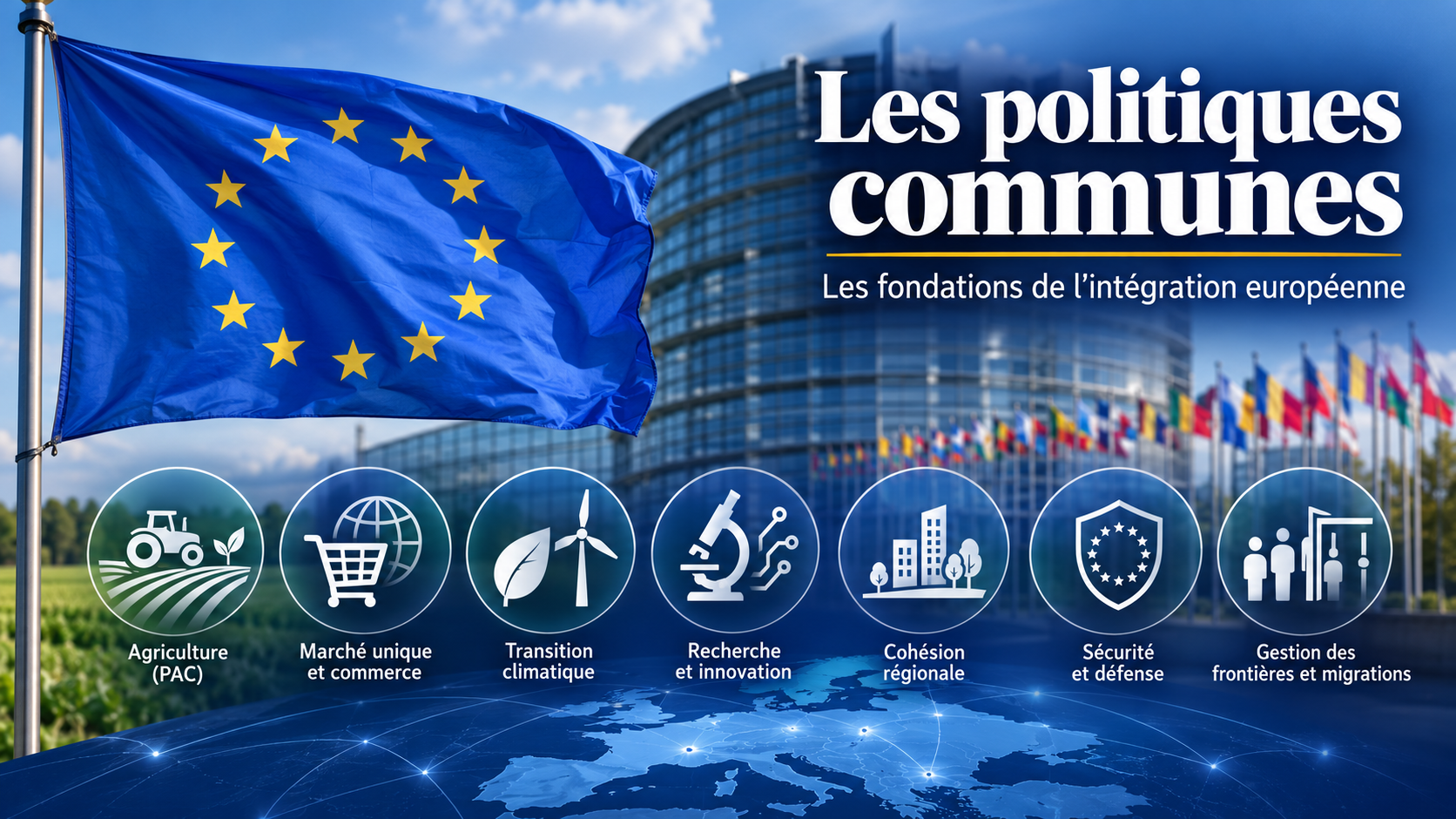
The European Union represents both an opportunity and a constraint. Alongside Germany, France remains one of the principal engines of European integration. At the same time, this integration limits certain areas of national autonomy, particularly in budgetary, trade, and regulatory policy, regularly reviving debates over sovereignty.
France’s future will depend largely on its ability to resolve several competing imperatives at the same time: maintaining a generous welfare state without undermining fiscal sustainability, restoring industrial competitiveness in an increasingly competitive global environment, managing the energy transition while protecting household purchasing power, controlling migration flows while addressing labour-market needs, and preserving social cohesion amid growing political polarisation.
More than a national case, France has become a laboratory for many of the challenges facing advanced democracies. The way it balances economic openness and sovereignty, social protection and fiscal discipline, cultural diversity and national cohesion will have consequences far beyond its borders. Its trajectory over the coming decades will therefore offer an important indication of whether European powers can preserve their influence in an increasingly multipolar world.
Atlas Observer Research Desk
Atlas Observer’s editorial and analytical desk.