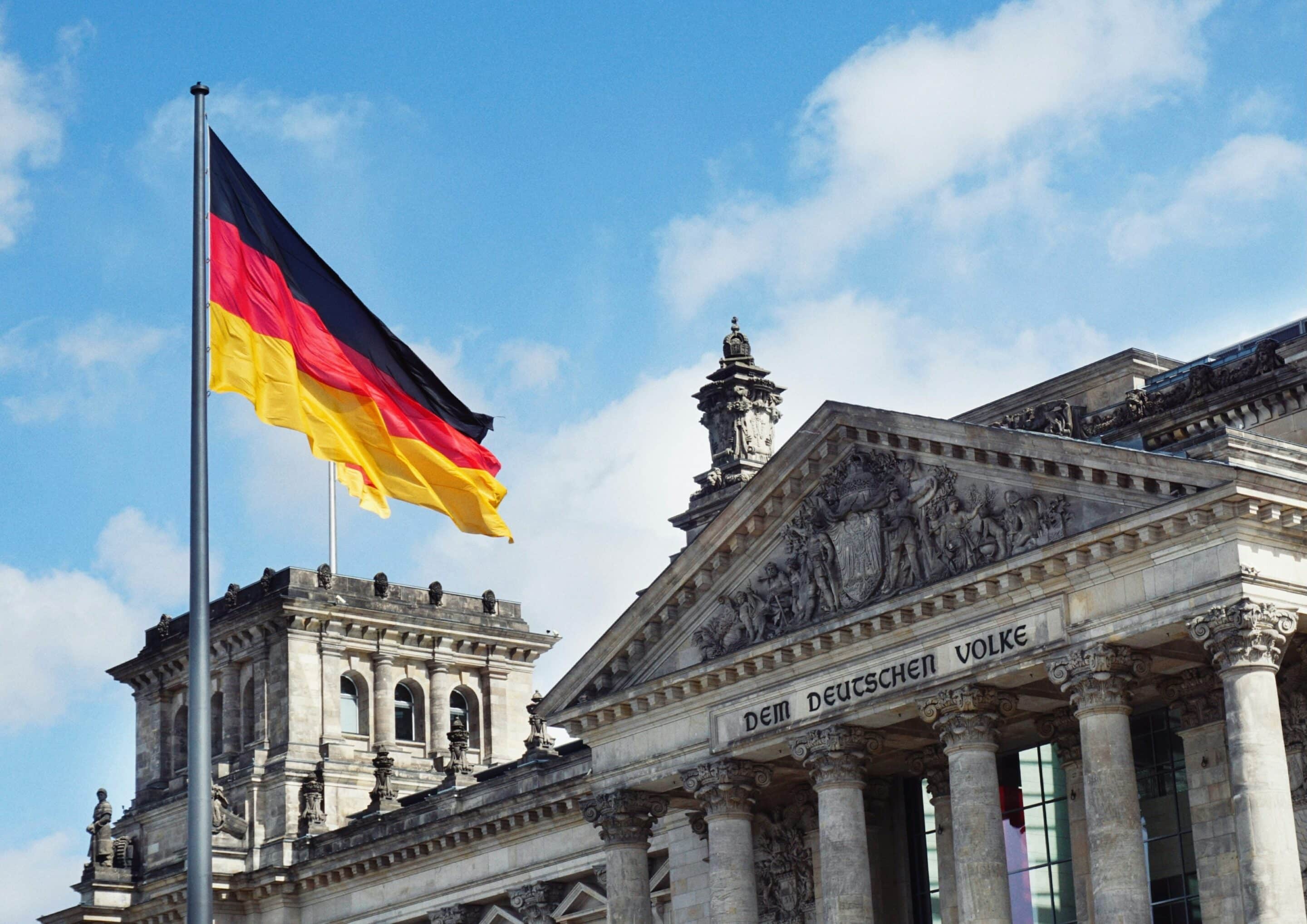
For several decades, Germany embodied one of the most remarkable economic success stories of the modern era. Destroyed in 1945, divided during the Cold War, and reunified in 1990, it became Europe’s largest economy, one of the world’s leading exporters, and the industrial core of the European Union.
Its model rested on a particularly effective combination: a powerful manufacturing base, a highly skilled workforce, export-oriented companies, monetary stability, institutionalised social dialogue, and relatively favourable access to energy and international markets.
This model profoundly shaped Europe. German automobiles, machine tools, chemicals, electrical equipment, and industrial technologies supplied the continent’s value chains. Germany’s trade surpluses became a symbol of its competitiveness, while Berlin gradually emerged as the European Union’s main political centre of gravity. Yet the conditions that enabled this success are changing.
The rupture with Russian energy supplies, China’s industrial rise, new American trade policies, population ageing, mounting infrastructure needs, and delays in parts of the digital economy are weakening the traditional foundations of German prosperity.
After two consecutive years of contraction, the German economy grew by only 0.2% in 2025. Exports declined for a third straight year, particularly in automobiles, machinery, and chemicals. The first quarter of 2026 nevertheless recorded growth of 0.3% compared with the previous quarter, suggesting a still-fragile stabilisation.
Germany is therefore not facing only a cyclical slowdown. It is confronting a structural transformation. The question is no longer simply whether it will remain Europe’s largest economy. It is whether Germany can rebuild a model of power suited to a world that is more conflictual, more technological, more protectionist, and less predictable.
From Catastrophe to Reconstruction
Contemporary Germany remains inseparable from the historical rupture of 1945. The defeat of the Nazi regime, the destruction of infrastructure, institutional collapse, and territorial division could have condemned the country to lasting decline. Yet the Federal Republic of Germany, established in the West, gradually developed a political and economic model capable of combining parliamentary democracy, market economics, monetary stability, and social protection.
Reconstruction was facilitated by American assistance, the 1948 currency reform, the recovery of industrial capacity, and Germany’s gradual integration into Western institutions. But it was also driven by a deeply rooted productive culture: technical excellence, vocational training, industrial specialisation, and cooperation among banks, companies, and regional institutions.
The social market economy became the central organising principle of the Federal Republic. It was based neither on unrestricted liberalism nor on state administration of the economy. Its objective was to preserve competition while maintaining social protection, structured labour relations, and a regulatory role for the state.
The codetermination system, which gives employee representatives a role in the governance of many large companies, helped shape a form of capitalism based more on negotiation than on permanent confrontation. Trade unions, employer federations, regional banks, and local governments formed a relatively stable institutional ecosystem.
This stability encouraged long-term investment. While some developed economies progressively shifted towards financial services, Germany preserved a substantial manufacturing base. German companies continued to produce complex goods that were difficult to replicate and often indispensable to foreign industries.
Reunification in 1990 then created an immense economic and fiscal challenge. Integrating the former East Germany required major financial transfers, modernisation of infrastructure, and restructuring of a productive system that had become uncompetitive.
The differences between East and West did not disappear entirely. However, reunification increased the country’s demographic, territorial, and political weight. Berlin once again became the capital of a state located at the geographical centre of an enlarged Europe.
Europe’s Productive Core
Germany’s power is rooted first and foremost in industry. It is not merely an economy dominated by globally recognised corporations. It is also composed of an unusually dense network of industrial groups, specialised suppliers, research centres, regional banks, vocational schools, and productive small and medium-sized cities.
This industrial fabric is distinguished by the importance of the Mittelstand, a term referring to small and medium-sized companies, often family-owned, highly specialised, and export-oriented.
Some of these firms are largely unknown to the general public, yet they dominate highly specific global markets: mechanical components, measuring instruments, automation systems, specialised chemicals, medical equipment, or industrial machinery.
Their competitiveness does not necessarily rely on low labour costs. It derives from technical expertise, product quality, close relationships with industrial clients, and their ability to occupy difficult-to-access niches.
Around this industrial fabric stand major groups such as Volkswagen, Mercedes-Benz, BMW, Siemens, Bosch, BASF, Bayer, SAP, Deutsche Telekom, and Allianz. Together, they give Germany a strong presence in automobiles, chemicals, electronics, software, telecommunications, pharmaceuticals, insurance, and industrial equipment.
German industry is also deeply European. Value chains cross national borders. German factories use components produced in Czechia, Poland, Hungary, Slovakia, Italy, France, and Austria. Conversely, many European industries depend on German orders, capital, technologies, or demand.
This explains why an industrial slowdown in Germany quickly spreads across the continent. Germany also retains an exceptional export capacity. Its current-account surplus still reached €203 billion in 2025, equivalent to roughly 4.5% of gross domestic product, despite a significant decline compared with the previous year.
But this model contains a fundamental vulnerability: it depends heavily on external demand. When global trade slows, China reduces imports, or the United States strengthens trade barriers, Germany is more exposed than economies driven more strongly by domestic consumption.
The Automotive Industry at the Centre of the Transition
The automotive sector remains one of the most visible symbols of German power. For decades, German manufacturers built their dominance on internal-combustion engines, mechanical quality, engineering, safety, and premium positioning. The sector supports a considerable number of direct and indirect jobs and sustains a broad supplier network.
Electrification is disrupting this balance. An electric vehicle uses fewer mechanical parts than a combustion-engine car. Value is shifting towards batteries, semiconductors, embedded software, automated-driving systems, and digital platforms.
In several of these areas, Chinese and American companies have developed significant advantages. Chinese manufacturers are no longer confined to low-cost vehicles. They are producing competitive, technologically advanced models at a rapid pace. They benefit from a vast domestic market, privileged access to battery supply chains, and extensive integration between industry, software, and electronics.
For German groups, China therefore has a dual character. It remains an essential market and a major production centre. At the same time, it is becoming a competitor capable of challenging German manufacturers in Europe and across emerging economies.
The automotive transition also threatens German suppliers specialised in engines, transmissions, fuel-injection systems, and components linked to combustion technology. Even when manufacturers themselves succeed in adapting, parts of the broader ecosystem may still be weakened.
The challenge therefore goes far beyond replacing one technology with another. It concerns Germany’s ability to preserve value added, skills, and industrial employment in a sector whose economic architecture is being entirely redefined.
The End of the Traditional Energy Equation
Germany’s industrial model long benefited from a relatively favourable energy equation. The country imported Russian gas at competitive prices, used coal, expanded renewable energy, and retained nuclear capacity until the closure of its final reactors in 2023.
This combination supported energy-intensive sectors, including chemicals, metallurgy, glass, paper, fertilisers, and parts of manufacturing.
The war in Ukraine disrupted this balance. The reduction in Russian deliveries forced Germany to diversify rapidly, build liquefied natural gas infrastructure, and accept higher costs.
Energy prices have become a central competitiveness issue. The German Ministry for Economic Affairs itself acknowledges that electricity prices remain high by international standards and that energy is one of the main cost components for energy-intensive industries.
At the same time, Germany continues to pursue the Energiewende, its transition towards an energy system based primarily on renewables. Its climate target is carbon neutrality by 2045. The energy framework also aims for renewables to account for 80% of electricity production by 2030.
This trajectory creates considerable opportunities in wind, solar, hydrogen, storage, electricity grids, energy efficiency, and industrial electrification.
Over time, it could reduce dependence on imported fossil fuels and strengthen the country’s energy sovereignty. But the transition also entails costs and constraints.
Germany must accelerate the deployment of electricity grids between the north, where a large share of wind generation is concentrated, and the industrial regions of the south. It must expand storage capacity, secure supply during periods of weak renewable generation, and finance the transformation of buildings, transport, and factories.
The International Energy Agency has stressed that this transition can strengthen both energy security and competitiveness, but only if it is supported by coherent policies, sufficient infrastructure, and predictable regulation.
The German energy debate therefore concerns less a simple opposition between supporters and opponents of the transition than competing visions of its pace, cost, and social distribution.
The Globalisation That Favoured Germany Is Changing
Germany’s success fully developed during the acceleration of globalisation. The eastward enlargement of the European Union gave German companies access to new production bases, new markets, and greater regional industrial depth. China’s rise created enormous demand for German automobiles, machinery, industrial equipment, and chemicals.
At the same time, the United States provided much of Europe’s security, allowing Berlin to devote more resources to its social economy and civilian infrastructure.
This configuration is now being challenged. China is developing its own industrial capabilities and gradually reducing certain technological dependencies. The United States is making greater use of subsidies, tariffs, technology restrictions, and local-content requirements to protect its industrial base.
Globalisation is not disappearing, but it is becoming more political. Supply chains are increasingly assessed according to resilience, location, security, and geopolitical compatibility. Semiconductors, batteries, rare earths, digital infrastructure, and dual-use technologies are becoming instruments of power.
For Germany, this evolution creates a strategic tension. Its economy needs open markets. But its security depends on reducing certain vulnerabilities. It must therefore reconcile commercial openness with diversification and the protection of critical supplies.
A sudden break with China would be economically costly. Excessive dependence would be strategically dangerous. Berlin has therefore favoured a policy of de-risking rather than complete decoupling. This approach seeks to diversify suppliers, protect sensitive infrastructure, review certain acquisitions, and limit exposure to the most critical dependencies without abandoning trade.
The difficulty lies in implementation. The interests of large corporations, export-oriented SMEs, technology sectors, and political leaders are not always aligned.
A Technological Power Facing the Digital Challenge
Germany remains a major scientific and technological power.
Its research institutes, technical universities, engineering firms, and vocational-training system preserve advanced capabilities in mechanics, robotics, automation, chemistry, optics, materials, and industrial technology.
The country played a pioneering role in the development of the “Industry 4.0” concept, which seeks to connect machinery, data, and production processes. The government continues to support intelligent automation, industrial data spaces, and the digitalisation of SMEs. Yet Germany has also accumulated delays in several areas.
Administrative procedures remain slow and complex. The digitalisation of public services is uneven. The deployment of high-speed networks must still be accelerated in parts of the country. The European Commission continues to emphasise the need to improve Germany’s digital-connectivity infrastructure.
Germany’s paradox is therefore that of a country capable of producing some of the world’s most advanced industrial machinery while struggling to digitalise routine administrative procedures. Artificial intelligence intensifies this tension. Germany possesses industrial data, engineers, researchers, and companies capable of developing advanced applications in predictive maintenance, design, logistics, medicine, and energy optimisation.
But it does not have a digital ecosystem comparable to those of the United States or China. The largest platforms, cloud infrastructures, and global artificial-intelligence companies remain largely outside Europe. Germany must therefore determine how to convert its industrial strength into a digital advantage. Its greatest opportunity probably does not lie in replicating American consumer platforms. It lies in applying artificial intelligence to industry, machinery, chemicals, healthcare, energy, and infrastructure.
Germany can still occupy a central position in these fields, provided it invests in computing capacity, data, skills, and regulatory simplification.
The Investment and Productivity Constraint
Germany’s difficulties are not caused solely by external shocks. Since the mid-2010s, productivity growth has slowed. Investment has remained insufficient in transport, digital infrastructure, energy networks, education, and parts of the public sector.
The OECD has argued that the weakening of Germany’s potential growth reflects, among other factors, low investment, a shrinking working-age population, and weaker productivity gains.
German fiscal discipline has long been presented as a guarantee of stability. The debt brake, embedded in the Basic Law, sharply restricts the federal structural deficit. It has helped preserve confidence in the public finances. German public debt stood at approximately 62.5% of GDP in 2024, below the European Union average.
But low debt does not automatically guarantee high-quality public capital. Ageing bridges, congested rail infrastructure, under-equipped schools, incomplete electricity grids, and slow administration can reduce competitiveness even when public finances remain relatively sound.
Germany must therefore rebalance its understanding of fiscal prudence. Financial stability remains essential. But postponing necessary investment for too long can also create an implicit debt in the form of deteriorating infrastructure, lost productivity, and technological delay.
New fiscal flexibility and dedicated infrastructure funds should allow a gradual increase in public investment. The OECD estimated that it could rise from around 3.1% of GDP in 2025 to 3.5% in 2027. The difficulty will lie less in mobilising funds than in converting them quickly into completed projects.
The Demographic Shock
Germany has approximately 83.6 million inhabitants and remains the most populous country in the European Union. Yet its demographic structure is one of its main vulnerabilities. Population ageing is gradually reducing the workforce while increasing spending on pensions, healthcare, and dependency.
In many sectors, labour shortages are becoming structural: healthcare, construction, engineering, information technology, transport, education, skilled trades, and manufacturing. This limits the ability of companies to expand even when they have sufficient orders and capital. Immigration has therefore become an indispensable component of the German economic model.
It can partially offset retirements, support domestic demand, and sustain the financing of social-protection systems. But its effectiveness depends on language integration, recognition of qualifications, access to housing, training, and administrative capacity.
Germany thus faces a political paradox. Its economy needs foreign workers. Yet immigration has also become a major source of electoral polarisation, especially in regions where perceptions of economic decline and institutional distance are strongest. Demography therefore cannot be treated only as a labour-market issue. It also concerns public services, social cohesion, political identity, and the state’s capacity to integrate new populations over the long term.
Territorial and Political Divisions
Germany is a federation composed of sixteen Länder with significant institutional powers. This structure allows regional adaptation but also complicates some national decisions.
The German territory is marked by strong specialisation. The south concentrates a large share of the automotive, mechanical, and advanced-technology sectors. The west remains shaped by the historical power of the Ruhr, chemicals, and major industrial infrastructure. The north is developing port, logistics, and offshore-wind activities. Berlin forms a distinct political, cultural, and technological centre.
Eastern Germany has made substantial progress since reunification, but differences remain in income, corporate headquarters, accumulated wealth, and demographic trajectories. These differences influence political behaviour.
The belief that certain regions or social groups bear the costs of transformation without receiving its benefits fuels distrust towards traditional parties.
The energy transition, immigration, the war in Ukraine, inflation, and potential deindustrialisation become connected through a common question: who bears the cost of change?
The rise of protest movements cannot be explained by ideology alone. It also reflects a crisis of confidence in the ability of institutions to protect living standards, provide security, and manage transformations perceived as increasingly rapid.
The risk for Germany is that economic disagreements could harden into lasting divisions among regions, generations, and social groups.
The Zeitenwende and the Return of Military Power
Since the Second World War, the Federal Republic has constructed its international identity around military restraint, multilateralism, and European integration. This strategic culture reflected both the weight of history and an international environment in which the United States largely guaranteed the security of the continent.
Russia’s invasion of Ukraine marked a rupture. The term Zeitenwende, literally a “turning point” or “change of era,” refers to the realisation that Germany can no longer separate economic prosperity from defence capacity.
Berlin has therefore launched a major increase in military spending, the modernisation of the Bundeswehr, and a stronger role within NATO. The effort now goes well beyond the €100 billion special fund announced in 2022. According to NATO, Germany plans to reach approximately 3.5% of GDP in strictly military expenditure by 2029, as part of a broader allied commitment to devote 5% of GDP to defence and security-related spending by 2035.
This evolution is changing Germany’s place in Europe. The country has the economic, industrial, and demographic scale required to become one of the continent’s central military pillars. Its industry can contribute to the production of ammunition, armoured vehicles, air-defence systems, submarines, sensors, and logistics equipment.
But larger budgets are not sufficient. Military power depends on operational readiness, production capacity, recruitment, coordination among European armed forces, and the speed of procurement. Germany must also rebuild a strategic culture capable of accepting difficult trade-offs.
The transition from a protected economic power to a strategically responsible power cannot be purely budgetary. It requires a profound doctrinal and political evolution.
The Franco-German Relationship
The relationship between France and Germany remains one of the structural pillars of the European Union. The two countries have often been described as the engine of European integration. Yet their models differ significantly. France has a more centralised state, a tradition of autonomous military power, a nuclear arsenal, and a highly presidential diplomatic system.
Germany relies more heavily on federalism, institutional negotiation, industrial power, and commercial integration. These differences can be complementary. They can also produce disagreements. Paris and Berlin regularly diverge on energy policy, European defence, fiscal rules, trade relations, enlargement, and the organisation of support for strategic industries.
France sometimes fears that Germany prioritises its industrial interests or its transatlantic relationship. Germany may consider some French proposals insufficiently disciplined in fiscal terms or unrealistic in economic terms.
Yet no durable European architecture can be built against either of the two countries. The challenge is therefore not to eliminate disagreements but to manage them. A mature Franco-German relationship does not require identical positions. It requires the capacity to produce compromises enabling Europe to act in energy, defence, digital affairs, industry, and international relations.
Germany and the European Union
German power is inseparable from the European Union. The single market gives German companies access to an integrated economic area, a common currency, and regional value chains. The euro reduces exchange-rate risks with Germany’s main trading partners and shields its economy from the stronger currency appreciation that a national currency would probably have experienced.
In return, Germany contributes substantially to the financing and stability of the Union. But this position creates a particular responsibility. When Berlin hesitates, Europe slows. When Germany acts unilaterally, it can destabilise its partners. The scale of German energy-support measures during the crisis raised concerns among countries with more limited fiscal space. Similarly, an excessively national German industrial policy could weaken the single market.
The future of German power will therefore depend on its ability to align national interests with a European strategy. Germany alone cannot compete with the United States or China in every field. But a Europe organised around a market of nearly 450 million people, an advanced scientific base, and coordinated industrial capacity can exert influence in technology, regulation, trade, and security.
Berlin must choose between a primarily national adaptation and the construction of common European capacity. In practice, it will probably seek to combine both.
An Economic Power That Remains Formidable
Germany’s difficulties should not lead to premature predictions of decline. The country retains major strengths. It possesses a diversified industrial base, advanced technical skills, strong scientific infrastructure, companies deeply embedded in global value chains, and relatively controlled public debt.
Its vocational-training system supports the transmission of industrial skills. Its companies have extensive knowledge of international markets. Its federal structure allows the existence of several powerful economic centres rather than excessive concentration around a single capital.
Germany also retains a strong capacity for adaptation. After the rupture with Russian energy, it rapidly built liquefied natural gas import capacity and diversified supplies. It is now accelerating investment in defence, electricity grids, semiconductors, and infrastructure.
The first results of 2026 indicate that the economy is not collapsing. Gross domestic product grew by 0.3% in the first quarter, while manufacturing value added increased by 0.7% compared with the previous quarter.
The Bundesbank expects a gradual recovery supported by public spending, infrastructure, and the progressive improvement of economic activity. Its late-2025 projections anticipated growth of approximately 0.6% in 2026 and 1.3% in 2027.
This recovery will not eliminate structural problems. Growth supported by public spending can stabilise the economy, but it cannot replace productivity gains, private innovation, energy competitiveness, or the creation of new companies.
Three Possible Trajectories
Germany’s future can be understood through three broad scenarios. The first is a European industrial revival. In this scenario, Germany modernises its infrastructure, reduces energy costs, accelerates digitalisation, and transforms its automotive sector. Investment in defence, energy, and semiconductors supports new productive capacity. The country uses its manufacturing strength to become a leader in low-carbon industry and applied artificial intelligence.
This trajectory would strengthen both Germany and the European Union. The second is managed stagnation. The economy would remain powerful but grow slowly. Large groups would preserve part of their position while some industrial activity moved abroad. Public spending would partially offset weak private investment. Living standards would remain high, but room for manoeuvre would gradually narrow. Germany would remain Europe’s leading economic power without recovering the dynamism of previous decades.
The third is relative industrial decline. Persistently high energy prices, insufficient adaptation in the automotive sector, digital delays, and a growing labour shortage would accelerate the erosion of the manufacturing base. The country would remain wealthy, but its economic and geopolitical influence would weaken. Social and territorial tensions would intensify, further reducing the capacity for reform.
None of these trajectories is predetermined. Germany has the resources required to avoid decline. But it must accept that the methods that ensured its past success will no longer be sufficient to secure its future.
Conclusion
Germany is approaching the end of a historical cycle. For several decades, its power rested on a coherent formula: security provided by the American alliance, relatively cheap Russian energy, Chinese growth, European integration, and industrial excellence. That formula no longer exists in its previous form.
Russia has once again become a strategic threat. China is simultaneously a partner, a market, and a competitor. The United States is demanding a greater European military effort while pursuing a more protectionist industrial policy. The climate transition requires enormous investment. Population ageing is shrinking the workforce.
Germany must now become more autonomous in energy, more innovative in digital technology, more active militarily, and more flexible economically. It must achieve this transformation without sacrificing the principles that underpinned its stability: parliamentary democracy, federalism, the social market economy, social dialogue, and European integration.
The main risk does not lie in a sudden disappearance of German power. It lies in adapting too slowly to a rapidly changing world. Conversely, the country’s greatest strength remains its ability to transform historical constraints into durable institutions.
The Germany of the future will probably no longer be only the export powerhouse built in the late twentieth century. It will have to become an industrial, energy, digital, and military power capable of operating in a more conflictual international environment.
A large part of Europe’s future will depend on whether it succeeds. Germany is not merely a country facing its own transformation. It is the principal test of Europe’s ability to preserve its prosperity, autonomy, and power in the twenty-first century.
Atlas Observer Research Desk
Atlas Observer’s editorial and analytical desk.