For several decades, Saudi Arabia occupied a singular position in international relations. It was simultaneously a leading oil exporter, the custodian of Islam’s holiest sites, a strategic partner of the United States, and one of the political centres of the Arab world. Its power nevertheless rested on a relatively stable architecture: oil generated revenue, Washington contributed to the kingdom’s security, and the monarchy redistributed part of the energy rent to preserve domestic cohesion.
That architecture has not disappeared, but it is no longer sufficient to define Saudi Arabia’s trajectory. The kingdom is now seeking to move beyond the role of a protected energy power and become a balancing power capable of acting simultaneously across markets, investment, diplomacy, technology, regional security, and the major flows connecting Asia, Europe, and Africa.
This transformation is not merely a national modernisation strategy. It reflects a deeper interpretation of the evolution of the international system. Saudi Arabia is preparing for a world in which the United States will remain a central military power but will no longer be able to organise regional balances alone; in which China will occupy an expanding position in trade and investment; in which India will become a major economic partner; and in which the energy transition will gradually alter the strategic value of hydrocarbons.
The Saudi project therefore consists of converting power based on a single resource into power based on multiple levers.
A Power Born from Oil, but Not Reduced to Oil
Energy remains the primary foundation of Saudi power. The kingdom possesses abundant reserves, relatively low extraction costs, extensive infrastructure, and an ability to adjust production that few other countries can match. Saudi Aramco is not merely an oil company. It represents one of the state’s principal economic, financial, and strategic instruments.
Saudi Arabia’s position in global markets therefore does not depend solely on the volume of oil it produces. It also rests on the kingdom’s capacity to increase or reduce supply, influence investor expectations, and coordinate its decisions with other producers through OPEC+. This adjustment function gives Riyadh an influence that exceeds its immediate share of global production.
Hydrocarbons also remain essential to financing the national transformation. Oil revenues support public expenditure, infrastructure, industrial programmes, and the investments of the sovereign wealth fund. Oil therefore finances the strategy intended, over time, to reduce the country’s dependence on oil.
This apparent contradiction lies at the heart of the Saudi model. The kingdom is not seeking to abandon hydrocarbons rapidly, but to maximise their value while they remain essential to the global economy. The International Energy Agency estimated that Saudi investment in upstream oil and gas could reach approximately $40 billion in 2025, the highest level in the Middle East. (iea.org)
Saudi Arabia is therefore pursuing two objectives simultaneously. It intends to preserve its position among the most competitive producers in an oil market likely to become increasingly selective, while using the revenues generated by that market to finance a more diversified economy.
The energy transition does not necessarily imply the rapid disappearance of oil. It could first result in a concentration of production among actors capable of extracting hydrocarbons at the lowest cost and with the most efficient infrastructure. Under such a scenario, Saudi Arabia could retain a dominant position even if global demand ceased to grow.
Its energy importance is also reinforced by geography. The kingdom is located close to the Strait of Hormuz, the Red Sea, the Bab el-Mandeb Strait, and the Suez Canal. These passages carry a substantial share of global energy trade. In 2025, nearly 20 million barrels of oil per day passed through the Strait of Hormuz, illustrating the exposure of the global economy to the security balance in the Gulf. (iea.org)
Saudi Arabia is therefore not only an energy supplier. It is also an actor in the security of the routes through which that energy reaches the major Asian and European markets.
Vision 2030: Transforming Rent into Productive Capacity
The kingdom’s economic transformation is structured around Vision 2030, launched under the authority of Crown Prince Mohammed bin Salman. The programme aims to reduce fiscal and economic dependence on hydrocarbons, develop the private sector, increase employment among Saudi nationals, and position the country within new value chains.
Tourism, aviation, logistics, entertainment, financial services, industry, digital technologies, renewable energy, and artificial intelligence all occupy an expanding place within this strategy.
Diversification first responds to a demographic constraint. Saudi Arabia has a young population whose expectations regarding employment, consumption, housing, and mobility cannot be met indefinitely by a public sector financed almost exclusively by oil rent. The kingdom must create productive activities capable of integrating a new generation that is more urbanised, better educated, and more connected to the wider world.
Diversification also responds to a fiscal constraint. When oil prices or production volumes decline, public revenues are immediately affected. The state must then arbitrate between current expenditure, infrastructure projects, and strategic investments. The greater the ambition of the transformation, the more difficult oil volatility becomes to absorb.
The results are real, although they require cautious interpretation. The International Monetary Fund has highlighted the sustained expansion of non-oil activities, contained inflation, and declining unemployment among Saudi nationals. According to the IMF mission conducted in 2026, the kingdom’s gross domestic product grew by 4.5% in 2025, supported both by the easing of OPEC+ production cuts and by robust domestic demand. (imf.org)
However, the expansion of non-oil activity does not necessarily mean that dependence on oil has disappeared. A significant share of this activity remains directly or indirectly supported by public expenditure, itself sustained by energy revenues. Genuine diversification cannot therefore be measured solely by the share of non-oil sectors in gross domestic product. It also depends on their ability to export, attract private capital on a lasting basis, generate productivity gains, and function without permanent state support.
The central question is one of conversion. Can the kingdom transform a mineral rent into skills, infrastructure, industries, and institutions capable of generating wealth independently of oil?
The Sovereign Wealth Fund as an Instrument of Power
The Public Investment Fund, or PIF, is one of the principal instruments of this conversion. Its role goes beyond that of a financial investor seeking returns alone. It operates as a tool of domestic transformation, international projection, and industrial policy.
Within the kingdom, the PIF finances infrastructure, companies, real estate projects, emerging industries, and new consumer sectors. Abroad, it acquires stakes in technology companies, financial institutions, infrastructure, sports ventures, and strategic assets.
This dual function allows Riyadh to pursue several objectives simultaneously. International investments can generate income, facilitate technology transfers, create industrial partnerships, and increase Saudi influence within major economies. Domestic investments, meanwhile, help build sectors that either did not previously exist or remained marginal.
The model nevertheless presents risks. When the state, the sovereign wealth fund, and major public companies simultaneously act as financiers, regulators, developers, and principal clients, the boundary between national strategy and economic discipline can weaken. Certain projects may be justified by their political, symbolic, or geostrategic value rather than by their immediate profitability.
Saudi megaprojects illustrate this tension. They contribute to changing the country’s image, attracting expertise, and stimulating new sectors, but they require considerable capital and involve complex execution. Their success will depend less on their architectural ambition than on their ability to attract residents, businesses, investors, and genuinely productive activities.
The challenge is therefore not merely to build. It is to create economic ecosystems capable of functioning once the initial phase of public financing has ended.
A Diplomacy Based on Diversified Partnerships
Saudi Arabia’s transformation also concerns its foreign policy. For much of the twentieth century, the relationship with the United States formed the external pillar of the kingdom. Washington guaranteed the security balance in the Gulf, while Riyadh contributed to the stability of oil supplies and broadly aligned itself with the Western strategic order.
That relationship remains fundamental. The United States continues to be a military, technological, and financial partner that would be difficult to replace. The Saudi armed forces rely extensively on American equipment, Gulf defence systems remain closely linked to Western capabilities, and US financial markets continue to play a central role in the management of Saudi assets.
Riyadh, however, no longer regards this alliance as an exclusive relationship. The kingdom is seeking to prevent security dependence on the United States from becoming a broader diplomatic dependence.
China has become an indispensable commercial and energy partner. It represents a major market for Gulf hydrocarbons and offers investment in infrastructure, technology, industry, and digital systems. Beijing has also demonstrated its ability to play a diplomatic role by facilitating the rapprochement between Saudi Arabia and Iran in 2023.
Russia occupies a different but strategic position. Cooperation within OPEC+ enables Riyadh and Moscow to coordinate part of their oil policy despite their divergences on other issues. This relationship gives the kingdom an additional lever in dealing with Western consumers and underlines its refusal to allow external geopolitical considerations to determine its energy policy entirely.
India is likewise becoming a leading partner. Its demographic expansion, energy needs, industrial development, and position in the Indian Ocean make it central to Saudi Arabia’s Asia-oriented strategy.
Europe remains important because of its companies, markets, technologies, and energy demand. Africa, meanwhile, represents a space for investment, religious influence, food security, and diplomatic cooperation.
This diversification does not mean that Saudi Arabia has chosen China over the United States or the East over the West. Rather, it reflects a policy of diversifying dependencies. Riyadh seeks security from some partners, commercial outlets from others, technology from several sources, and diplomatic autonomy through competition among them. The objective is not alignment, but room for manoeuvre.
From Regional Confrontation to the Search for Stability
During the 2010s, Saudi regional policy was characterised by a more interventionist posture. The kingdom sought to contain Iranian influence, intervene in Arab transitions, support selected governments, and lead a military operation in Yemen.
This phase exposed the limitations of financial and military power when it is not accompanied by a durable political settlement. The war in Yemen generated considerable human, financial, and diplomatic costs. Tensions with Qatar weakened the cohesion of the Gulf Cooperation Council. Rivalry with Iran increased the exposure of Saudi infrastructure to missiles, drones, and armed groups aligned with Tehran.
The 2019 attacks against the oil facilities at Abqaiq and Khurais marked a turning point. They demonstrated that an actor equipped with relatively inexpensive weapons could temporarily affect the core of Saudi Arabia’s energy apparatus. They also reinforced Riyadh’s doubts regarding the actual extent of the American security guarantee.
Since then, Saudi policy has appeared increasingly oriented towards risk reduction. Dialogue with Iran, normalisation with Qatar, the pursuit of de-escalation in Yemen, and renewed contacts with various regional actors all reflect one priority: preserving an environment stable enough to enable the implementation of Vision 2030.
This evolution does not mean that rivalry between Riyadh and Tehran has disappeared. The two states remain opposed in their visions of regional order, alliances, influence networks, and several security issues. Saudi Arabia nevertheless appears to have concluded that permanent confrontation could undermine its economic transformation. Regional stability has therefore become an economic asset.
Investors, tourists, international companies, and skilled workers are less likely to commit to a country exposed to repeated attacks or regional escalation. De-escalation diplomacy is therefore not only a security policy. It is a component of the development strategy.
The Complex Relationship with the United States
The relationship between Riyadh and Washington remains one of the most important axes of Saudi foreign policy. It rests on structural interests: energy, defence, intelligence, investment, technology, and the regional balance.
The relationship has nevertheless become more transactional. Saudi Arabia expects more explicit security guarantees, access to advanced technologies, civil nuclear cooperation, and recognition of its status as a regional power. The United States, for its part, seeks to preserve its influence in the Gulf, limit Chinese expansion in strategic sectors, secure energy supplies, and integrate the kingdom into a regional architecture compatible with American interests. The two partners therefore need each other, but their priorities are no longer systematically identical.
Riyadh notably refuses to allow its oil policy to be determined solely by American electoral or economic considerations. The kingdom also wishes to preserve economic relations with China and energy coordination with Russia. Washington, meanwhile, remains attentive to nuclear proliferation, technology transfers, human rights, and Saudi cooperation with rival powers.
The Saudi-American partnership is therefore neither broken nor restored to its previous form. It is being renegotiated. This renegotiation reflects a broader transformation of the international system: regional powers no longer necessarily wish to choose one camp permanently. They seek to cooperate with several poles according to the sectors and interests concerned.
A Religious Power in Transition
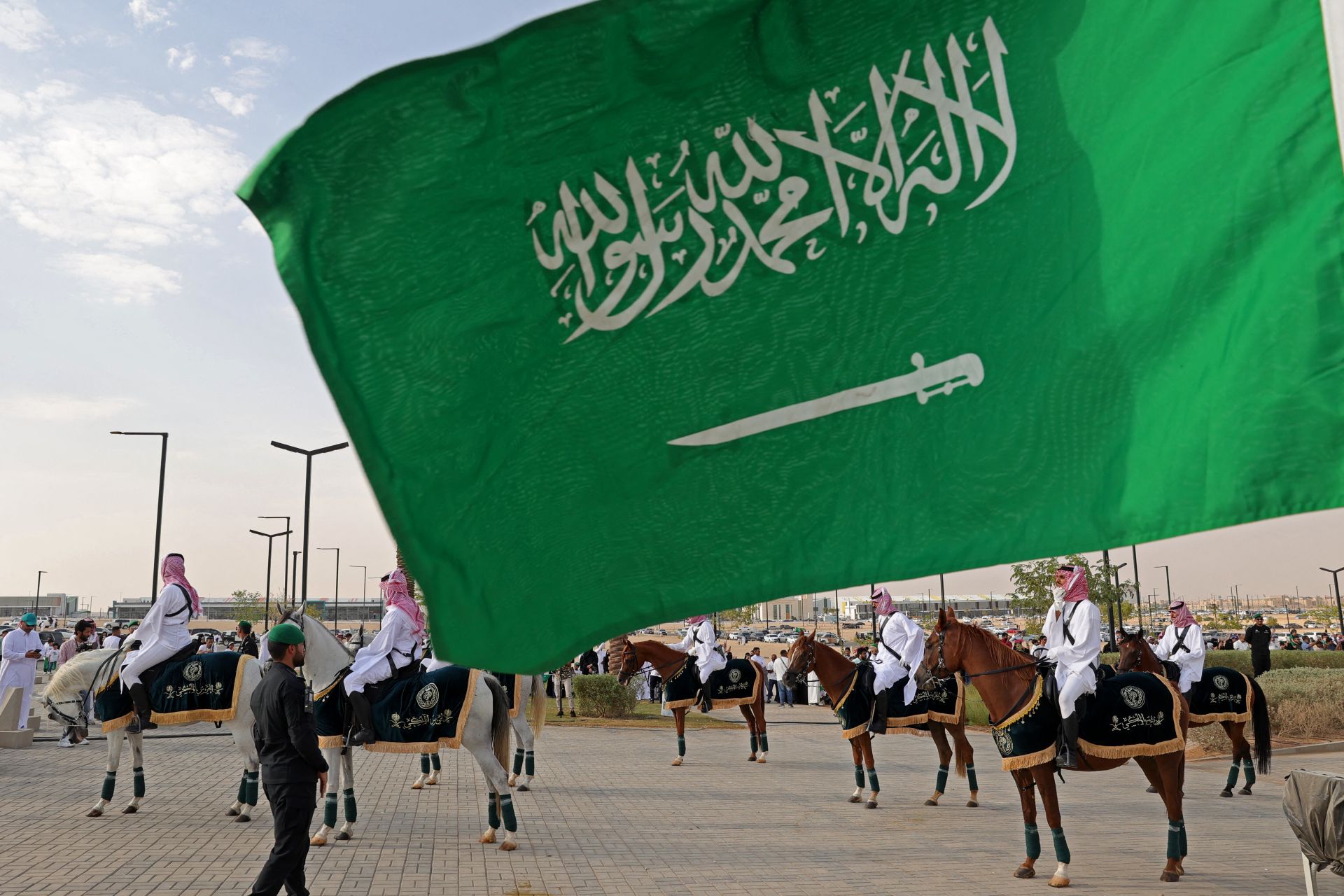
Saudi Arabia possesses a form of influence that no economic strategy can reproduce: it is home to Mecca and Medina, the two holiest sites in Islam. The administration of the pilgrimage grants the kingdom a particular responsibility and enables it to maintain relations across the Muslim world.
This religious centrality long accompanied the international diffusion of a conservative interpretation of Islam supported by Saudi institutions, funding, and educational networks.
The kingdom is now seeking to alter that image. The authorities increasingly emphasise Saudi national identity, a religious interpretation more tightly controlled by the state, and social opening designed to accompany economic modernisation.
The changes are visible in women’s access to employment and driving, the expansion of entertainment, the organisation of cultural and sporting events, the opening to international tourism, and the reduced public role of certain religious institutions.
This transformation nevertheless remains organised from the top. Social liberalisation has not necessarily been accompanied by an equivalent political opening. The state seeks to liberalise certain forms of behaviour while maintaining tight control over political expression, the media, civil society, and opposition.
The Saudi model therefore combines social modernisation, political centralisation, and economic nationalism. Its stability will depend on the leadership’s ability to maintain a balance between the expectations of a changing society and the concentration of decision-making power.
Sport, Culture, and Image as Instruments of Influence
Saudi investment in sport, tourism, media, culture, and entertainment should not be viewed as a mere communication strategy.
Sport contributes to several objectives: developing a leisure economy, attracting visitors, improving quality of life, strengthening national identity, and increasing the kingdom’s international visibility. Football, boxing, golf, motorsport, and international competitions are becoming instruments of global positioning.
These investments are sometimes criticised as an attempt to divert attention from concerns regarding human rights. That interpretation highlights a genuine aspect of Saudi image strategy, but it does not fully explain the phenomenon. Sport is also part of an economic policy designed to create sectors, jobs, infrastructure, and new consumer markets.
Contemporary influence no longer rests solely on armed forces, resources, or alliances. It also depends on a state’s ability to produce events, narratives, brands, and spaces capable of attracting capital and talent. Saudi Arabia is investing precisely in this symbolic dimension of power.
The Fragilities of the Transformation
Saudi ambition is considerable, but it remains exposed to several vulnerabilities. The first is financial. The multiplication of projects could increase funding needs precisely as oil revenues become more uncertain. The IMF considers that the kingdom’s fiscal and external buffers remain substantial, while also noting the possibility of persistent fiscal and current-account deficits over the medium term. (imf.org)
The second vulnerability concerns execution. Transforming tourism, industry, energy, transport, education, employment, and cities simultaneously requires exceptional administrative capacity. Announcements, investments, and infrastructure do not by themselves guarantee the emergence of a competitive economy.
The third vulnerability lies in the role of the private sector. A diversified economy requires companies capable of investing, innovating, exporting, and taking risks independently of public procurement. When the state remains the principal engine of growth, diversification can remain dependent on its financing capacity.
The fourth vulnerability concerns human capital. The kingdom must adapt its education system, strengthen technical skills, attract international talent, and raise productivity. The nationalisation of employment can support the integration of Saudi citizens, but it must be reconciled with the needs of companies seeking competitive expertise.
The fifth vulnerability is regional. Energy infrastructure, maritime routes, and major projects remain exposed to tensions with Iran, conflict in Yemen, threats to navigation in the Red Sea, and wider crises across the Middle East.
Finally, the kingdom’s international image remains shaped by issues related to human rights, public freedoms, and the concentration of power. Investment and modernisation may alter that image, but they do not eliminate criticism.
Saudi Arabia in a Multipolar World
Saudi Arabia’s rise illustrates a broader evolution in international relations. Middle powers equipped with resources, capital, a strategic geographic position, and strong state capacity now enjoy greater room for manoeuvre.
Saudi Arabia has neither India’s population, China’s industrial power, nor the United States’ military capacity. It nevertheless possesses a rare combination: energy resources, financial reserves, religious centrality, geographic position, Arab influence, investment capacity, and access to the leaders of the world’s major powers.
This combination allows it to operate as a pivotal state. It can engage with Washington without breaking with Beijing, coordinate oil policy with Moscow while investing in Europe, negotiate with Iran while strengthening its military capabilities, and deepen relations with India without abandoning its historic ties with Pakistan.
This flexibility is a strength, but it requires constant balancing. The more rivalry among the major powers intensifies, the greater the pressure on Riyadh to restrict certain forms of cooperation.
The real test of Saudi autonomy will emerge when its various partnerships become contradictory. The kingdom will then have to determine how far it can diversify its alliances without jeopardising access to the technologies, defence systems, and markets on which it depends.
A Power in Conversion
Saudi Arabia remains an oil power, but it no longer wishes to be defined exclusively by that function. It seeks to convert energy into capital, capital into infrastructure, infrastructure into economic activity, and economic activity into durable international influence.
The success of this conversion is not guaranteed. It will depend on fiscal discipline, the quality of execution, private-sector productivity, the education and training of the population, and stability in the Middle East.
Yet the transformation is already sufficiently advanced to alter the kingdom’s place in the world.
Saudi Arabia is no longer merely a state from which other powers seek oil or diplomatic support. It is gradually becoming an actor that chooses its partners, directs capital flows, influences energy markets, hosts negotiations, and participates in the reconfiguration of relations between the West and Asia.
Its objective is not to replace the great powers, but to become indispensable to their relations.
In a fragmented world, Saudi power lies precisely in this ability to position itself between competing poles: close enough to each to cooperate, autonomous enough to negotiate, and important enough not to be ignored.
Atlas Observer Research Desk
Atlas Observer’s editorial and analytical desk.