Trust as a Business Model
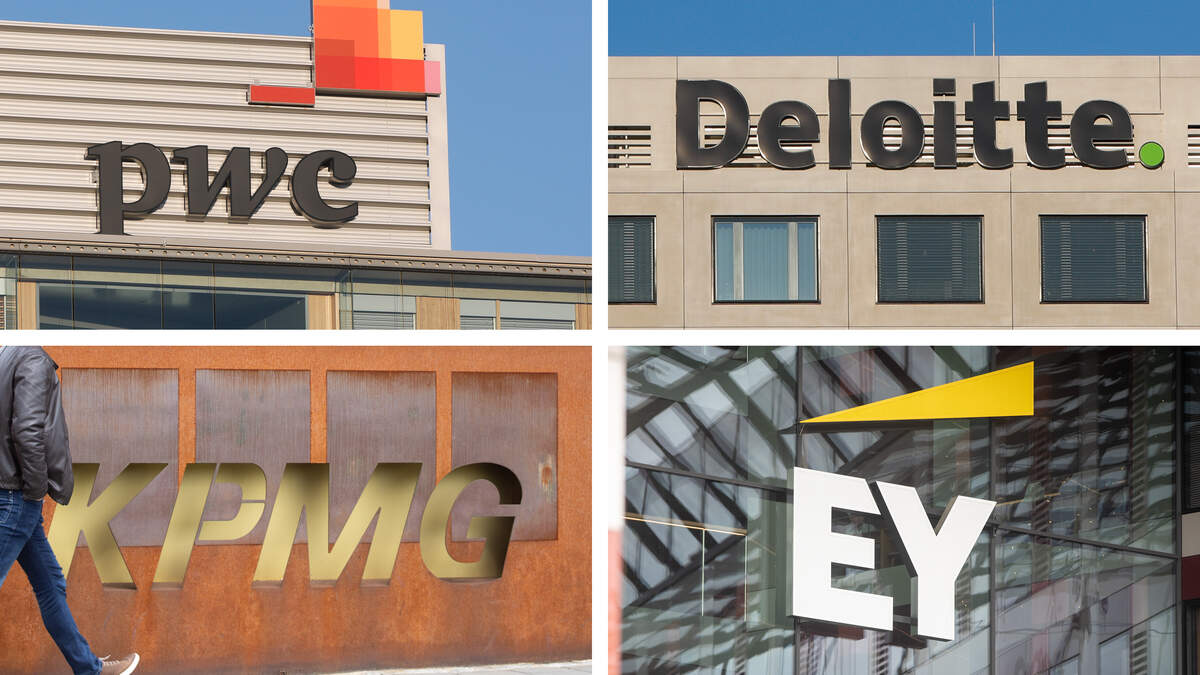
Whenever a multinational corporation publishes its financial results, completes a major acquisition, goes public, or undertakes a large-scale restructuring, the same group of firms is often working behind the scenes. Deloitte, PwC, EY, and KPMG—collectively known as the "Big Four"—have grown far beyond their traditional role as auditors. Today, they operate across strategy consulting, taxation, digital transformation, cybersecurity, regulatory compliance, risk management, and public sector advisory.
Their influence has become so pervasive that it often goes unnoticed by the general public. Yet these firms are deeply embedded in the functioning of global financial markets. They audit many of the world's largest corporations, advise on transactions worth hundreds of billions of dollars, and contribute to the implementation of accounting and regulatory standards across most major economies.
This central position carries a unique responsibility. Confidence in financial information depends, in large part, on the ability of these firms to deliver audits that are independent, rigorous, and credible.
That confidence, however, was profoundly shaken at the beginning of the twenty-first century.
Enron: The Scandal That Reshaped Global Auditing
At the end of the 1990s, Enron was widely regarded as one of America's most innovative companies. Behind its success, however, lay a sophisticated system of accounting manipulation designed to conceal massive losses and artificially inflate the company's financial health.
When the scandal erupted in 2001, Enron collapsed in what became one of the largest corporate bankruptcies in U.S. history. Thousands of employees lost both their jobs and retirement savings, while investors suffered tens of billions of dollars in losses.
The scandal also exposed serious failures at Arthur Andersen, then one of the world's five largest accounting firms. As Enron's external auditor, Arthur Andersen was accused of compromising its independence and destroying documents related to the investigations.
Although certain legal convictions were later overturned, the firm's reputation was irreparably damaged. Arthur Andersen disappeared from the market, reducing the global audit industry from the "Big Five" to today's Big Four. Its collapse permanently transformed the profession.
A New Era of Corporate Governance
The shock created by Enron led the United States to adopt the Sarbanes-Oxley Act (SOX) in 2002, one of the most significant corporate governance reforms of the modern era.
The legislation strengthened executive accountability, imposed stricter internal control requirements, reinforced auditor independence, and created the Public Company Accounting Oversight Board (PCAOB) to supervise audit firms serving publicly listed companies.
Beyond the United States, these reforms influenced corporate governance practices around the world. Companies expanded their compliance functions, boards of directors strengthened audit committees, and enterprise risk management became a fundamental component of modern governance.
The Big Four consequently evolved into far more than external auditors. They became essential partners in helping organizations navigate an increasingly complex regulatory environment.
From Audit Firms to Global Advisory Giants
Over the past two decades, the Big Four have fundamentally transformed their business models. While audit remains their historic foundation, it is no longer their primary engine of growth. The firms have invested heavily in management consulting, digital transformation, cloud technologies, cybersecurity, artificial intelligence, international taxation, environmental, social and governance (ESG) services, mergers and acquisitions, and enterprise risk management.
Today, they recruit not only accountants but also engineers, software developers, cybersecurity specialists, data scientists, economists, lawyers, and AI experts.
This diversification reflects the evolving needs of organizations operating in an environment defined by increasingly complex regulation, digital disruption, geopolitical uncertainty, and rapidly changing technologies.
The Big Four now position themselves as integrated professional services firms capable of supporting clients throughout virtually every stage of organizational transformation.
Market Concentration and Persistent Criticism
This evolution has also generated ongoing debate. The global audit market for large publicly listed companies remains highly concentrated. In many jurisdictions, nearly every major listed corporation is audited by one of the Big Four. Such concentration limits competition and periodically raises concerns about systemic risk should another major firm fail.
Critics have also questioned the potential conflicts of interest created when firms simultaneously provide audit and consulting services, despite increasingly stringent regulatory safeguards designed to preserve auditor independence.
Furthermore, several high-profile corporate failures over the past two decades have renewed questions regarding auditors' ability to identify financial weaknesses before they become crises.
These recurring debates illustrate that confidence in financial markets remains dependent on a delicate balance between technical expertise, professional independence, and public accountability.
Artificial Intelligence Opens a New Chapter
Following the regulatory transformation triggered by Enron, the profession now faces a second major turning point: artificial intelligence. The Big Four are investing billions of dollars in generative AI, machine learning, and advanced data analytics.
Traditionally, auditing relied heavily on sampling techniques, with auditors examining representative portions of financial transactions. Today's computational capabilities increasingly allow firms to analyze entire datasets rather than selected samples.
AI systems can identify anomalies, detect unusual transaction patterns, compare contractual documentation automatically, review thousands of legal documents, and generate summaries for audit teams within minutes.
In mergers and acquisitions, AI significantly accelerates due diligence by processing vast volumes of documentation that previously required weeks of manual review.
Regulatory compliance is also becoming increasingly automated as AI assists organizations in monitoring an ever-growing body of accounting, financial, and legal requirements.
The profession is gradually moving beyond the concept of an annual audit toward more continuous monitoring of financial risks.
New Risks in the Digital Age
Artificial intelligence also introduces new challenges. Generative AI models may produce inaccurate information, misinterpret documentation, or reproduce biases embedded in training data.
In a profession where an audit opinion carries significant legal and professional responsibility, human judgment remains indispensable.
Additional concerns include data confidentiality, cybersecurity, protection of commercially sensitive information, algorithmic transparency, and accountability for decisions supported by AI systems.
Regulators around the world are progressively developing frameworks intended to ensure that AI remains compatible with the core principles of auditing: transparency, explainability, professional skepticism, and independence.
Artificial intelligence therefore does not eliminate the auditor's responsibility—it fundamentally reshapes how that responsibility is exercised.
The Emergence of the Augmented Auditor
The transformation of the Big Four extends beyond technology itself. The profile of the modern professional is evolving rapidly. Firms increasingly seek individuals capable of combining financial expertise with data analytics, artificial intelligence, cybersecurity, international regulation, and enterprise risk management.
The auditor of the twenty-first century is becoming a multidisciplinary advisor. At the same time, client expectations continue to evolve. Organizations increasingly expect more than statutory financial assurance. They seek strategic insights capable of improving decision-making, strengthening resilience, anticipating risks, and supporting long-term transformation. Audit is therefore gradually becoming not only a mechanism of verification but also a source of strategic intelligence.
Conclusion
The evolution of the Big Four mirrors many of the defining transformations of contemporary capitalism. The Enron scandal demonstrated how failures in governance and auditor independence could undermine confidence in financial markets. The reforms that followed established a significantly stronger framework for accountability and oversight.
Nearly a quarter of a century later, artificial intelligence represents another structural turning point. Audit firms now possess technologies capable of analyzing unprecedented volumes of data, automating significant portions of audit procedures, and enhancing the identification of financial and operational risks. Yet these technological advances also demand greater transparency, stronger governance, and continued human oversight.
The future of the profession will not be defined by replacing auditors with algorithms, but by successfully integrating artificial intelligence while preserving the principles that have always underpinned financial credibility: independence, professional judgment, ethical responsibility, and public trust. In an increasingly digital global economy, these qualities remain the foundation upon which confidence in capital markets ultimately depends.
Primary Sources
- Enron Corporation – U.S. Congressional Investigation Reports.
- Sarbanes-Oxley Act (2002).
- Public Company Accounting Oversight Board (PCAOB).
- International Auditing and Assurance Standards Board (IAASB).
- International Ethics Standards Board for Accountants (IESBA).
- International Federation of Accountants (IFAC).
- Deloitte, PwC, EY, and KPMG annual reports and publications on artificial intelligence, auditing, and professional services transformation.
- International Organization of Securities Commissions (IOSCO).
- Organisation for Economic Co-operation and Development (OECD) – Corporate Governance and Digital Transformation.
Atlas Observer Research Desk
Atlas Observer’s editorial and analytical desk.