Few conflicts have transformed the international system as profoundly as the war between Russia and Ukraine. What began in February 2022 as a large-scale invasion rapidly evolved into the largest conventional war in Europe since the Second World War. Yet its significance extends far beyond the battlefield. It has accelerated geopolitical fragmentation, reshaped military doctrines, altered energy and industrial policies, and redefined relationships between major powers.
More than four years later, the conflict cannot be understood solely through territorial gains or losses. It has become a structural event whose consequences will likely influence international politics for decades. Like the Korean War, the Arab-Israeli conflicts or the Cold War confrontations, the Russia–Ukraine war has become a reference point from which future strategic thinking will be measured.
Understanding its legacy therefore requires moving beyond the daily evolution of the front lines and examining how it has transformed the foundations of global power.
A War of Political Objectives
Wars are rarely fought solely to conquer territory. They are instruments through which states seek political outcomes. Assessing the Russia–Ukraine conflict therefore begins with comparing the objectives pursued by each actor against the realities that emerged.
Russia entered the conflict with ambitions extending well beyond eastern Ukraine. The initial campaign suggested an expectation of rapid political collapse in Kyiv, the installation of a government more favorable to Moscow, and a redefinition of Ukraine's strategic orientation. Four years later, none of these political objectives has been fully achieved.
Ukraine remains an independent state with functioning institutions, internationally recognized leadership and an armed force that has become one of Europe's largest and most experienced militaries.
Conversely, Ukraine's own objectives evolved throughout the conflict. Initial priorities focused on national survival before expanding toward recovering occupied territories and restoring internationally recognized borders. While the country successfully preserved its sovereignty and regained portions of territory during earlier counteroffensives, complete territorial restoration has remained beyond reach.
The result is a strategic paradox. Russia failed to impose political control over Ukraine, while Ukraine has not yet recovered all occupied territories. Both sides continue to claim strategic legitimacy despite falling short of maximal objectives.
This ambiguity increasingly characterizes modern interstate conflicts, where political endurance often proves more decisive than rapid battlefield victories.
Military Transformation Beyond the Front
Perhaps the conflict's greatest legacy lies in how it has transformed modern warfare.
For decades, many military planners expected future wars to be dominated by precision strikes, stealth aircraft and rapid maneuver. Ukraine demonstrated instead that industrial capacity, logistics and attrition remain fundamental determinants of military success.
The widespread employment of inexpensive drones fundamentally altered battlefield economics. Systems costing hundreds or thousands of dollars routinely destroyed equipment worth millions. Commercial technologies became integral components of military operations, reducing barriers between civilian innovation and defense applications.
Electronic warfare evolved from a specialized capability into a central component of battlefield survival. Communications, navigation systems and unmanned platforms became constant targets of electronic disruption, forcing continuous adaptation by both sides.
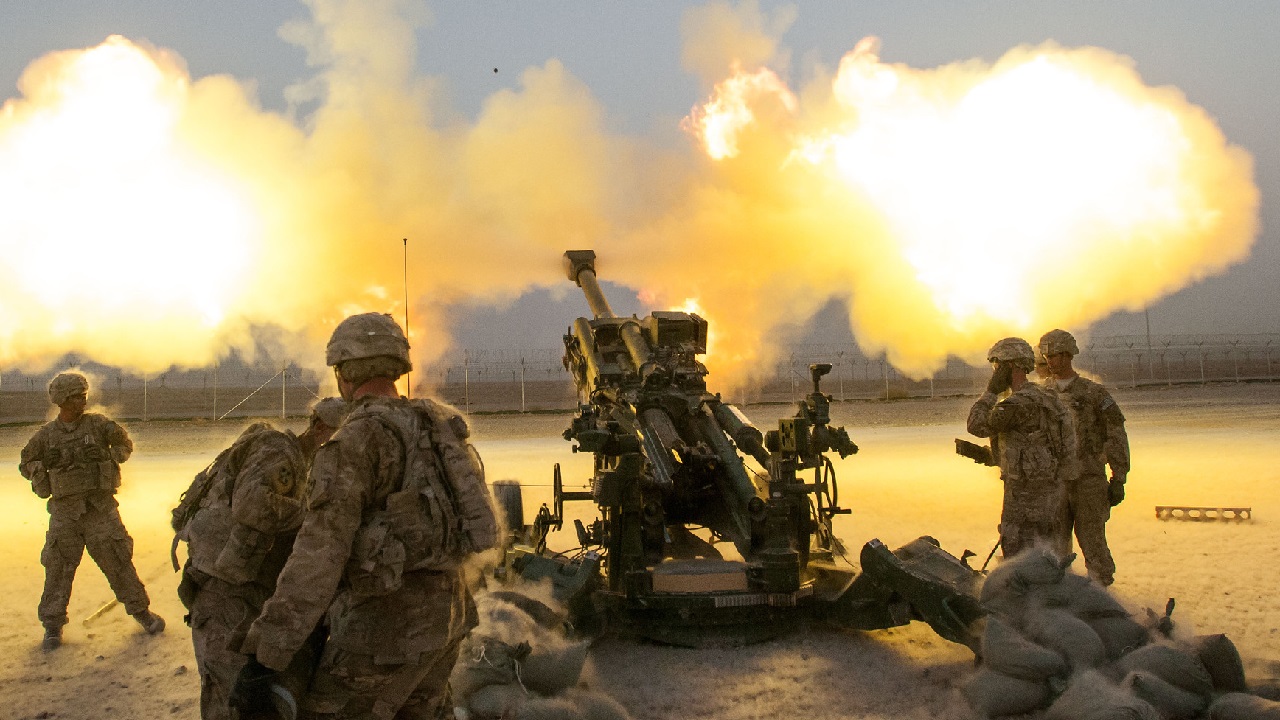
Artillery regained strategic importance after decades during which counterinsurgency operations had dominated Western military thinking. Large-scale ammunition production, stockpile management and industrial resilience returned as essential national security concerns.
The conflict also highlighted the continuing importance of engineering, fortifications and logistics. Static defensive networks, minefields and layered positions repeatedly slowed offensive operations despite advances in precision-guided weapons.
Rather than replacing traditional military capabilities, emerging technologies integrated with them, producing a hybrid model that is likely to shape military doctrine across the world.
Russia's Strategic Adaptation
Predictions made during the first months of the conflict often underestimated Russia's capacity for adaptation.
Despite unprecedented sanctions, the Russian state reorganized significant portions of its economy around wartime production. Defense manufacturing expanded substantially, supported by increased public spending and industrial mobilization.
Energy exports gradually shifted toward Asian markets, reducing dependence on European customers while strengthening commercial relationships with China and other emerging economies.
Militarily, Russia adjusted from rapid offensive operations toward a strategy emphasizing attrition, sustained artillery employment and industrial superiority. Rather than relying primarily on maneuver, it increasingly sought to exploit advantages in production capacity, manpower and ammunition availability.
These adaptations, however, came with significant costs. Long-term technological restrictions, financial pressures and increased dependence on non-Western partners have altered Russia's strategic position. Moscow retains substantial military capabilities but now operates within a geopolitical environment characterized by greater reliance on Beijing and other alternative partners.
The conflict therefore demonstrates that sanctions alone rarely produce immediate strategic collapse, particularly when applied against large resource-producing economies capable of restructuring external trade.
Ukraine's Strategic Reinvention
Ukraine underwent one of the most remarkable military transformations of the twenty-first century.
From a force largely equipped according to Soviet doctrine, it progressively integrated Western operational concepts, intelligence support, precision systems and decentralized command structures.
Innovation emerged not only through external assistance but also through necessity. Ukrainian industry and military units became leaders in drone development, autonomous maritime systems and rapid battlefield adaptation.
The country's political resilience likewise exceeded many early expectations. State institutions continued functioning despite repeated attacks on infrastructure, while international partnerships expanded significantly.
Nevertheless, Ukraine's strategic position remains closely linked to sustained external support. Military equipment, financial assistance and reconstruction funding continue to represent essential components of national resilience.
This dependence creates an unusual strategic situation in which battlefield endurance is influenced not only by domestic capabilities but also by political decisions taken across multiple allied capitals.
Europe's Strategic Awakening
Few regions have experienced greater geopolitical transformation than Europe.
For decades following the Cold War, many European governments reduced defense expenditures while emphasizing economic integration and strategic interdependence. The Russia–Ukraine war fundamentally challenged these assumptions.
Defense budgets increased across much of the continent. Military procurement accelerated, industrial production expanded and national security regained prominence within public policy.
Energy strategy also underwent profound revision. The reduction of Russian gas imports forced diversification toward alternative suppliers, liquefied natural gas infrastructure and accelerated investment in renewable energy.
Perhaps most significantly, the conflict reinforced NATO's central role in European security. Finland and Sweden's accession represented one of the Alliance's most important enlargements in decades, extending NATO's strategic reach across Northern Europe.
The conflict therefore strengthened precisely the security architecture that Russia had long sought to limit.
The Return of Industrial Power
One of the war's most important lessons concerns industrial capacity.
Modern military power cannot rely solely upon advanced technologies. Sustained conflict requires continuous production of ammunition, vehicles, missiles, replacement equipment and logistical support.
Governments across Europe, North America and Asia increasingly recognize that national resilience depends upon manufacturing capabilities, secure supply chains and access to critical raw materials.
The conflict has therefore accelerated broader trends already emerging after the COVID-19 pandemic. Economic security has become inseparable from national security.
Industrial policy, once largely viewed through the lens of competitiveness, has returned as an instrument of strategic autonomy.
The Fragmentation of the International System
Beyond Europe, the war has accelerated the emergence of a more fragmented international order.
Rather than producing universal alignment, the conflict exposed differing perspectives between Western democracies and many countries across Asia, Africa, Latin America and the Middle East.
While sanctions isolated Russia from much of the transatlantic community, numerous states maintained economic or diplomatic engagement with Moscow according to their own national interests.
This reflects a broader evolution toward multipolarity, where international alignments increasingly vary according to issue, sector and regional priorities rather than permanent ideological blocs.
The war therefore illustrates that contemporary geopolitics is becoming more flexible, transactional and regionally differentiated.
Lessons for Future Conflicts
The Russia–Ukraine war has become a laboratory for military, economic and geopolitical adaptation.
Future conflicts will likely incorporate several enduring characteristics demonstrated throughout this war: widespread autonomous systems, pervasive electronic warfare, resilient industrial production, decentralized innovation and long-term economic competition.
Victory itself may increasingly become difficult to define.
Rather than decisive military conclusions, modern interstate wars may produce prolonged periods of strategic competition in which political endurance, industrial capacity and alliance management prove more influential than rapid territorial conquest.
The conflict therefore challenges many assumptions inherited from both the Cold War and the post-Cold War era.
Conclusion
The Russia–Ukraine war has already secured its place among the defining geopolitical events of the twenty-first century.
Neither side has achieved complete victory, yet both have fundamentally altered the strategic environment in which future international relations will unfold. Russia demonstrated unexpected resilience while failing to realize its initial political ambitions. Ukraine preserved its sovereignty and transformed its military, though at immense human and economic cost.
Europe rediscovered defense as a strategic necessity. NATO expanded. Industrial policy returned to the forefront of national security. Energy systems diversified. Military doctrines evolved under the pressure of technological innovation and industrial attrition.
Ultimately, the conflict is not only about Russia and Ukraine. It represents a broader transition from the assumptions of the post-Cold War world toward a new international landscape defined by strategic competition, industrial resilience, technological adaptation and renewed great-power rivalry.
History will likely remember this war less for the exact location of its front lines than for the way it reshaped the geopolitical architecture of the twenty-first century.
Atlas Observer Research Desk
Atlas Observer’s editorial and analytical desk.