In just over half a century, the United Arab Emirates (UAE) has evolved from a newly established federation of small Gulf emirates into one of the world's most influential economic, diplomatic, and technological actors. While its substantial hydrocarbon reserves provided the foundation for its development, they no longer fully explain its position within the international system.
The UAE has gradually built a model of power based on economic diversification, world-class infrastructure, strategic investment, technological innovation, institutional stability, and pragmatic diplomacy. Its ambition extends beyond becoming a regional power in the Middle East; it seeks to establish itself as a global platform connecting Asia, Africa, Europe, and, increasingly, the Americas.
At a time when global supply chains are being reconfigured, the energy transition is accelerating, artificial intelligence is reshaping industries, and competition among major powers is intensifying, the United Arab Emirates stands out as one of the states that has most successfully anticipated the structural transformations of the twenty-first century.
A Young Federation with a Distinctive System of Governance
Established in 1971, the federation brings together seven emirates: Abu Dhabi, Dubai, Sharjah, Ajman, Umm Al Quwain, Fujairah, and Ras Al Khaimah.
Its institutional framework is built upon a balance between local autonomy and federal coordination. Each emirate retains significant authority over its internal affairs, while defence, foreign policy, monetary policy, and national security are managed at the federal level.
Abu Dhabi, home to the country's largest oil reserves, serves as the political and financial centre of the federation. Dubai, meanwhile, has become its principal commercial, logistics, and financial hub.
This complementary relationship has enabled the UAE to develop a unique governance model in which multiple centres of economic growth coexist without undermining institutional cohesion.
In a region frequently affected by political instability, this continuity of governance has become a major source of confidence for international investors.
Economic Diversification as a National Strategy
Although the UAE remains one of the world's leading hydrocarbon producers, its long-term strategy has focused on progressively reducing its dependence on oil revenues. This diversification rests on several strategic pillars.
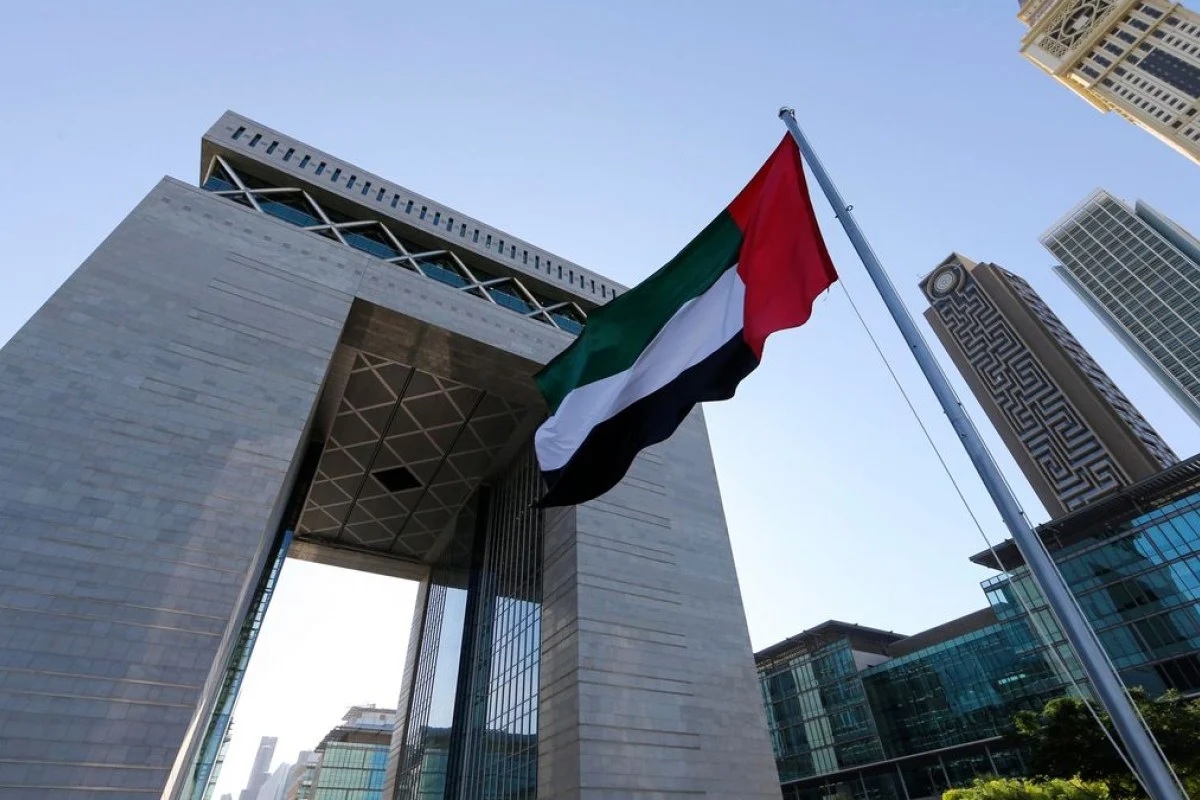
The first is financial services. Dubai has become one of the world's leading financial centres connecting Europe, Asia, and Africa, largely through the Dubai International Financial Centre (DIFC), which hosts international banks, investment funds, law firms, and asset managers.
The second pillar is global logistics. The Port of Jebel Ali, DP World's international port network, and the airports of Dubai and Abu Dhabi have positioned the UAE as one of the world's most important trade and transportation hubs.
The third pillar is tourism. Every year, the country attracts tens of millions of visitors through a strategy combining premium infrastructure, global events, high levels of security, and exceptional international connectivity.
Finally, the UAE is investing heavily in the industries expected to define the coming decades, including artificial intelligence, cybersecurity, biotechnology, space technologies, digital finance, and advanced energy solutions. This diversified economic structure has become one of the country's greatest sources of resilience.
Sovereign Wealth Funds as Instruments of National Power
The United Arab Emirates possesses several of the largest sovereign wealth funds in the world. The Abu Dhabi Investment Authority (ADIA), Mubadala, and ADQ collectively manage hundreds of billions of dollars invested across every major region of the global economy.
Their role extends well beyond financial returns. These investments enable the UAE to acquire strategic holdings, gain access to emerging technologies, strengthen industrial partnerships, support domestic diversification, and expand its long-term economic influence.
Today, Emirati sovereign wealth funds are active across sectors including infrastructure, semiconductors, healthcare, energy, telecommunications, transportation, real estate, and digital technologies. Their financial capacity has become a strategic instrument of influence comparable, in some respects, to industrial policy in larger economies.
A Foreign Policy Built on Pragmatism
The UAE's foreign policy is characterised by strategic balance and pragmatic engagement. The country maintains close security ties with the United States while simultaneously expanding its partnerships with China. It has also strengthened relations with India, the European Union, African countries, and numerous Asian economies.
This diversified diplomatic approach reduces dependence on any single strategic partner. The Abraham Accords represented a significant turning point by normalising relations with Israel and opening new opportunities for economic, technological, and security cooperation.
At the same time, the UAE continues to engage with regional actors whose relationships with one another often remain complex. Its diplomacy generally prioritises economic interests, regional stability, and the security of international trade routes.
A Global Logistics Powerhouse
Few countries have invested as extensively in transforming geography into strategic advantage. Located at the crossroads of Europe, Asia, and Africa, the UAE has leveraged its position to become one of the world's most important logistics platforms. DP World's global network manages ports across multiple continents.
Emirates and Etihad Airways have transformed the country into one of international aviation's principal transit hubs. Its numerous free economic zones attract thousands of multinational companies through competitive taxation, modern infrastructure, and efficient administrative procedures.
As global supply chains continue to evolve, this logistical specialisation further strengthens the country's international competitiveness.
Innovation as the Next Frontier
The United Arab Emirates now aims to become a leading player in advanced technologies. It was among the first countries in the world to establish a dedicated Ministry of Artificial Intelligence. Today, it is investing heavily in data centres, digital infrastructure, cybersecurity, and the computing capacity required to support next-generation AI models.
The country's space programme reflects the same ambition. The Hope Mars Mission, investments in space exploration, and broader scientific initiatives demonstrate a long-term commitment to building a knowledge-based economy that extends well beyond hydrocarbons. International universities operating in the UAE also contribute to developing the highly skilled workforce required for this transformation.
The Challenges Facing an Emerging Global Power
Despite its remarkable achievements, the Emirati model faces significant challenges. The global energy transition may gradually reduce the strategic importance of oil revenues, which remain an important component of public finances.
Regional competition is also intensifying. Saudi Arabia is rapidly developing its own financial, tourism, and logistics sectors. Qatar continues to pursue an influential diplomatic and media strategy.
In addition, the UAE's economy depends heavily on an expatriate workforce that represents the majority of its population, creating long-term challenges related to labour markets, talent development, and social cohesion.
Finally, global competition in artificial intelligence, semiconductors, and other strategic technologies requires sustained investment on an unprecedented scale.
A Power Beyond Oil
Reducing the United Arab Emirates to its hydrocarbon production no longer reflects the reality of its development. Oil provided the initial resources, but the country's national strategy has progressively shifted towards building an economy driven by services, finance, logistics, technology, and global investment.
Rather than competing directly with larger demographic or military powers, the UAE seeks to become an indispensable node within the global economy. Its influence increasingly derives from its ability to connect markets, attract capital, finance innovation, welcome international talent, and maintain a stable environment in a region often characterised by uncertainty.
In a world where power is increasingly measured by the control of financial, commercial, digital, technological, and human flows, the United Arab Emirates represents the emergence of a model built on connectivity rather than size.
Over the coming decades, its ability to sustain economic diversification, remain competitive in strategic technologies, and preserve its diplomatic balance will determine whether this network-based model of power can establish itself as one of the defining centres of gravity of the twenty-first century.
Atlas Observer Research Desk
Atlas Observer’s editorial and analytical desk.